
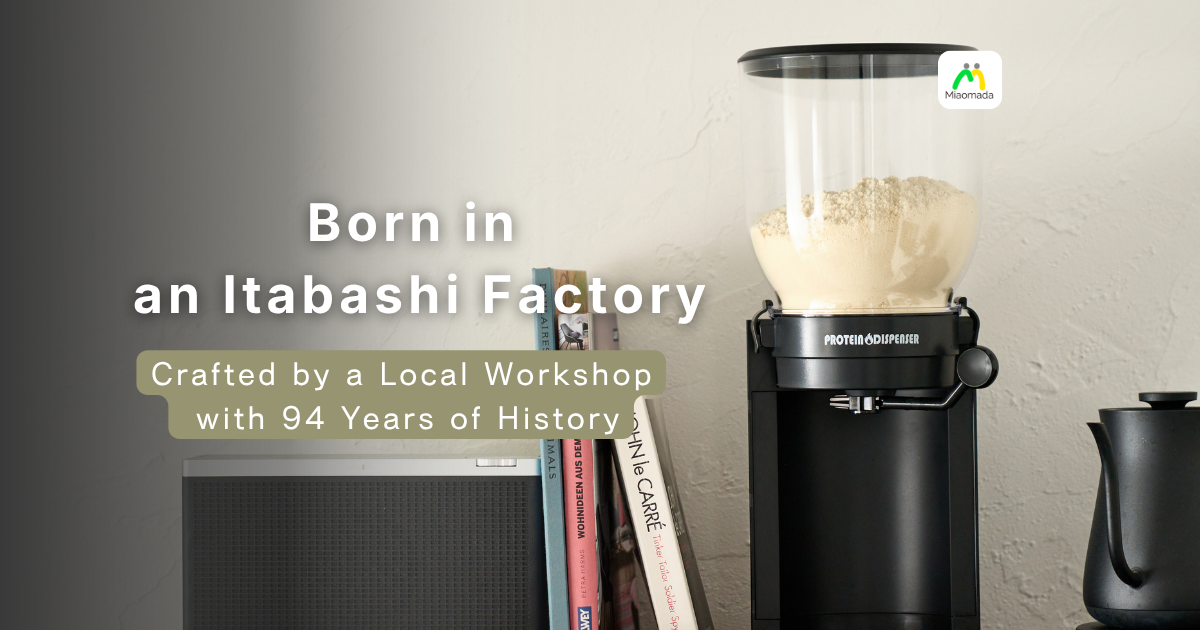
Why a 1932 Founded Factory in Tokyo Builds Miaomada’s Protein Dispenser
Miaomada’s flagship product, the ALENNE Protein Dispenser, is built in the factories of our parent company, Showa Denki Co., Ltd., based in Itabashi Ward, Tokyo.
Founded in 1932, this year marks our 94th year of continuous precision parts manufacturing.
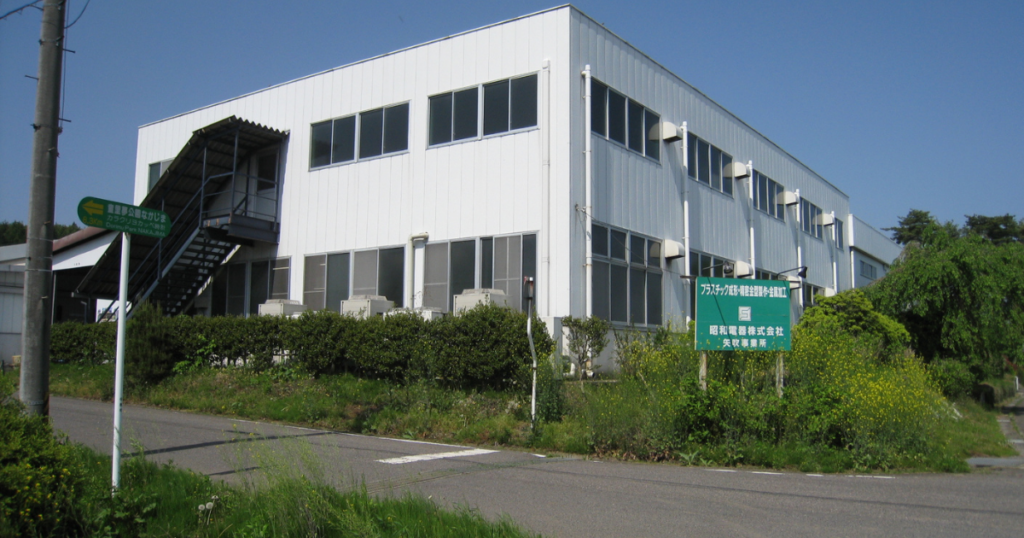
A Company That Started in 1932 Making High-Pressure Equipment
Showa Denki’s predecessor was Nippon Koatsu Kogyo Co., Ltd. (Japan High-Pressure Industries), founded in 1932. Its first products were high-pressure equipment: gas cylinders and valves.
After the war, both the name and the direction of the company shifted:
- 1946: Renamed Showa Denki Co., Ltd.
- 1953: Moved into plastics manufacturing with compression molding
- 1962: Expanded into injection molding as the industry shifted to plastic precision parts
- 1970: Established the Fukushima plants, expanding our manufacturing capacity
Today, Showa Denki runs on ¥35 million in capital with 211 employees across three locations: the head office in Hasunuma, Itabashi Ward, and two plants in Fukushima, the Yabuki Plant in Nishishirakawa District and the Iwase Plant in Sukagawa City. One of the core business lines is manufacturing precision parts for gas and water meters.
The main business is contract manufacturing: making parts for other companies’ products, built exactly to spec. Decades of that work. And somewhere along the way, a quiet belief built up inside the company: someday, we’d like to put our own product out into the world.
“Let’s Bet on Our Own Product”: How Miaomada Came Out of the Business Planning Office in 2021
Contract manufacturing doesn’t generate revenue without customer orders. With a business structure that depends on the economy and on the health of specific client businesses, there had long been a voice inside the company: “we need a path where we’re driving our own revenue.”
In summer 2021, Showa Denki set up a new department: the Business Planning Office. The mission was to plan and develop the company’s own products, something like an internal venture team.
I was the sales manager at the time, and I was moved into the new Business Planning Office. We didn’t know what would sell. The brief was to find something we could make with our existing technology and bring to market. Several ideas came up and then quietly disappeared.
What stuck was the protein dispenser.
A small daily friction, measuring protein powder every morning at home, might be something we could solve with the precision parts manufacturing we already had. That hunch led to the founding of Miaomada Co., Ltd. in December 2021, and then to two successful Makuake crowdfunding campaigns after that.
Precision Parts Manufacturing, Applied to a Household Dosing Device
Let me come back to that early history for a moment.
High-pressure equipment, then plastic compression molding, then precision injection molding. The products changed, but the underlying work stayed the same: “produce things to spec, at volume, when precision is required.”
A high-pressure valve that’s not sealing well becomes an accident. An injection-molded plastic part that doesn’t come out to spec becomes a defective assembly downstream. Every line of work was the same in one respect: holding millimeter (sometimes micron) tolerances across thousands to tens of thousands of units per month.
That experience accumulated for 94 years. And inside that company, the protein dispenser project started up.
To be fair, the precision required for a household protein dispenser isn’t the same level required for a high-pressure valve or a precision injection part. A protein dispenser can tolerate a much wider window.
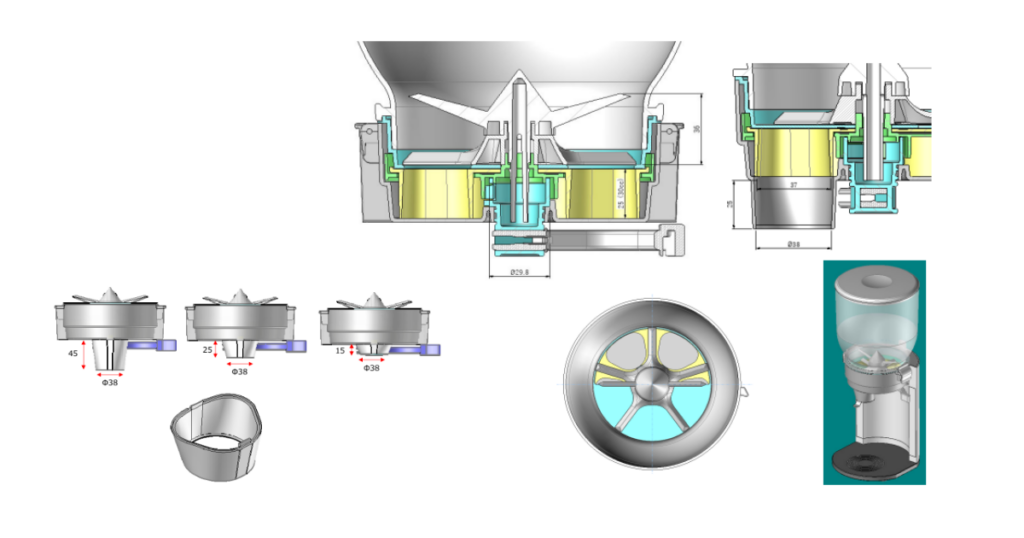
Still, the company’s standard was “we hold tolerances on what we ship.” That standard let us run 19 rounds of prototyping on the dosing mechanism and refine it to a level we were genuinely satisfied with.
In-House Factories in Itabashi and Fukushima: Design to Assembly, All in Japan
Miaomada’s protein dispenser is designed and built entirely inside Japan:
- Development (design and prototyping): Miaomada (Itabashi Ward, Tokyo)
- Plastic molding and final assembly: Showa Denki’s Yabuki Plant (Fukushima)
- Metal parts machining: Showa Denki’s Iwase Plant (Fukushima)
Miaomada handles development; Showa Denki handles production. Tokyo and Fukushima are physically apart, but communication inside the group lands fast. “Can we adjust this here” gets answered in less than 24 hours. The 19 rounds of patient prototyping were only possible because that internal communication is close.
Showa Denki holds ISO 9001 (Quality Management, JQA-QMA13794) and ISO 14001 (Environmental Management, JQA-EM0465), certified by the Japan Quality Assurance Organization (JQA).
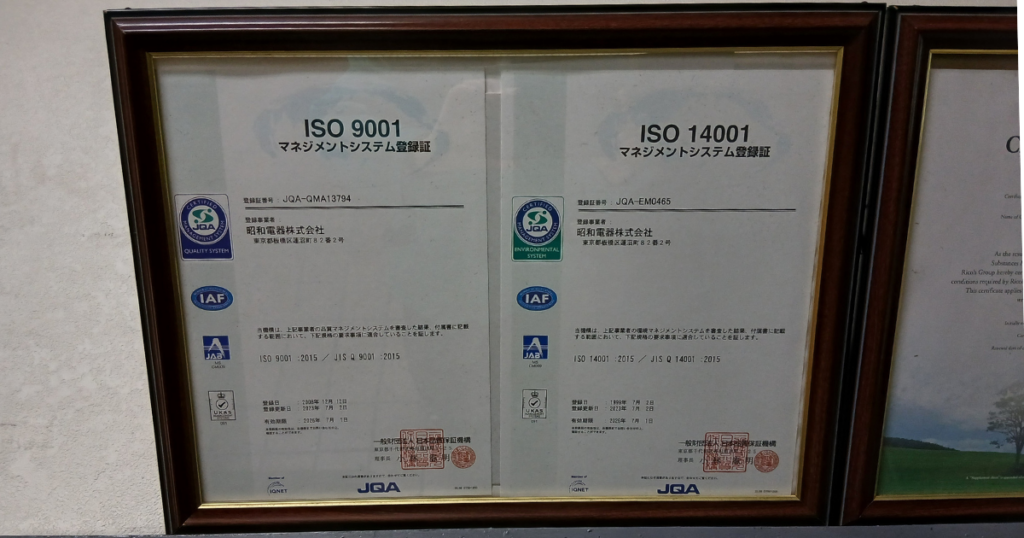
A lot of products say “Made in Japan” without much behind it. In our case, the design drawings and the final assembly really do both happen at our own factories in Itabashi and Fukushima. That’s what’s actually inside Miaomada’s protein dispenser.
Try the ALENNE Protein Dispenser
It’s currently available in Japan. We’re working on bringing it to the US market. If you’d like to put the patented dosing mechanism through its paces, stay tuned.
If it ends up making your morning a little easier, that’s exactly what we set out to do.
![Protein Dispenser Development Story [Part 2] — DP-M2: From Setback to the World](https://en.miaomada.co.jp/wp-content/uploads/2026/05/260511_004_part2_en-768x403.png)


![Inside Two Successful Makuake Crowdfunding Campaigns [Part 2]: DP-M2, Building for the World](https://en.miaomada.co.jp/wp-content/uploads/2026/04/260428_008_part2_en-768x403.png)
![Protein Dispenser Development Story [Part 1] — How DP-M1 Came to Be](https://en.miaomada.co.jp/wp-content/uploads/2026/05/004_hero_en-768x403.png)