Protein for Women: How to Choose It, How Much to Drink, and How to Keep It Going
Protein powder still carries a whiff of the weight room, something men who lift buy for themselves. But protein isn’t only for people who lift. It matters just as much if you don’t train, or if you’re eating less to lose weight.
Below, how to pick a powder, how much to drink, when, and the 2 worries that come up most, weight gain and bulking up.

Why Women Are Most Likely to Fall Short on Protein
The lighter you eat, the easier protein is to miss. It’s what your skin, hair, nails, and blood are built from, not only your muscle. Less about building your body, more about keeping it running.
Ordinary meals don’t always get you there. Bread and coffee in the morning, a salad or a quick sandwich at midday, and the day’s total can land well under what you need. Dieting makes the shortfall worse still, because cutting how much you eat cuts the protein with it, usually without anyone noticing.
If you stay short on protein long enough, research suggests the body starts breaking down muscle to cover the gap. Less muscle tends to mean a lower resting metabolism, which can make it harder to lose weight even when you eat less (Wycherley et al., 2012). Protein powder is one straightforward way to close that gap.
Does Protein Make You Gain Weight, or Bulk You Up?
Neither one holds up well. These are the 2 worries that stop most women from trying it, so they’re worth taking apart.
Start with bulking up. Muscle gets big through hard resistance training and enough food, built up over a long time. Drinking protein on its own won’t do it. Paired with reasonable exercise, it’s more often described as leaning you out.
Then gaining weight. Protein powder is food, so a serving has calories, roughly 100 to 150 of them. Swap it in for a cookie or a sweet drink, and it usually brings your intake down rather than up. Protein also tends to keep you full longer, and some people find they snack less without trying to.
What matters is not treating it as a magic powder. It won’t make you thinner or better looking by itself. It fills in nutrition you’re missing and supports the meals and the training that do the actual work.
The Scale Isn’t the Whole Story: Muscle Is Denser Than Fat
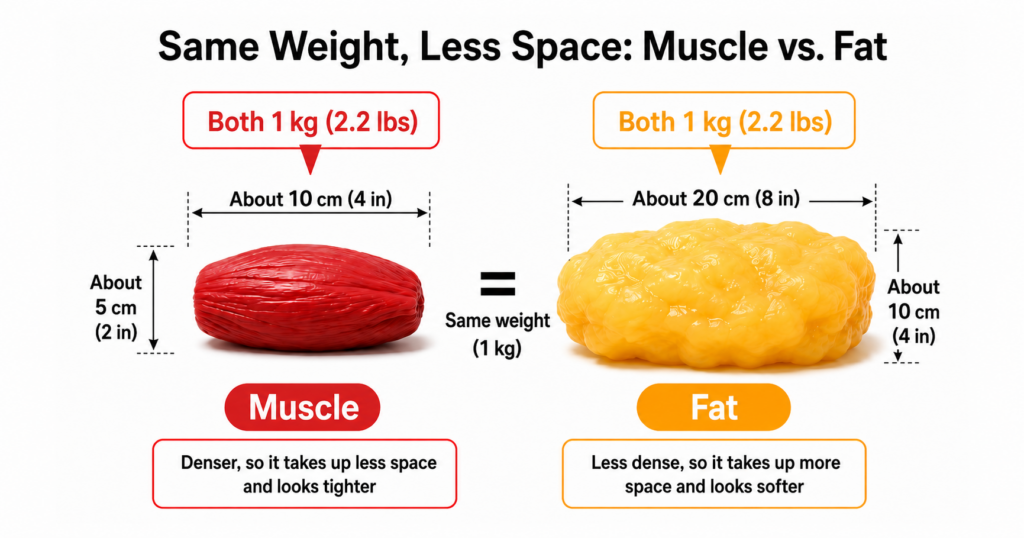
Body weight and how you look don’t move together. Muscle takes up less room than fat at the same weight, so you can look leaner while the number on the scale goes up.
Muscle is denser than fat. A pound of muscle takes up less space than a pound of fat, and it looks tighter on you. So as training and protein add muscle while fat comes off, the scale can barely move, or even rise a little, while your outline keeps sharpening.
That’s the argument for not living and dying by the number. Gaining weight after starting protein doesn’t necessarily mean you’ve gained fat. The mirror and the way your clothes fit will tell you more about how the work is going.
How Much Protein Should a Woman Drink a Day?
A rough target is about 1 g per kg of body weight, so around 50 g a day at 110 lb (50 kg). You don’t need to get all of it from powder. Filling the gap your meals leave is enough.
That figure is an easy place to start. If you train regularly, the target is sometimes set a little higher.
Powder only has to cover what the food doesn’t. If breakfast is where you run short, one serving in the morning (roughly 15 to 20 g of protein) is a realistic way to use it. Spreading the total across breakfast, a snack, and a post-workout serving also tends to be easier for the body to take in than one large dose (Mamerow et al., 2014).
Starting from ‘a little more than I’m getting now’ is the version most people can keep. More on daily totals in When Is the Best Time to Drink Protein? 4 Patterns, and What the Latest Research Concludes.
Choosing a Type: Whey, Soy, and Casein
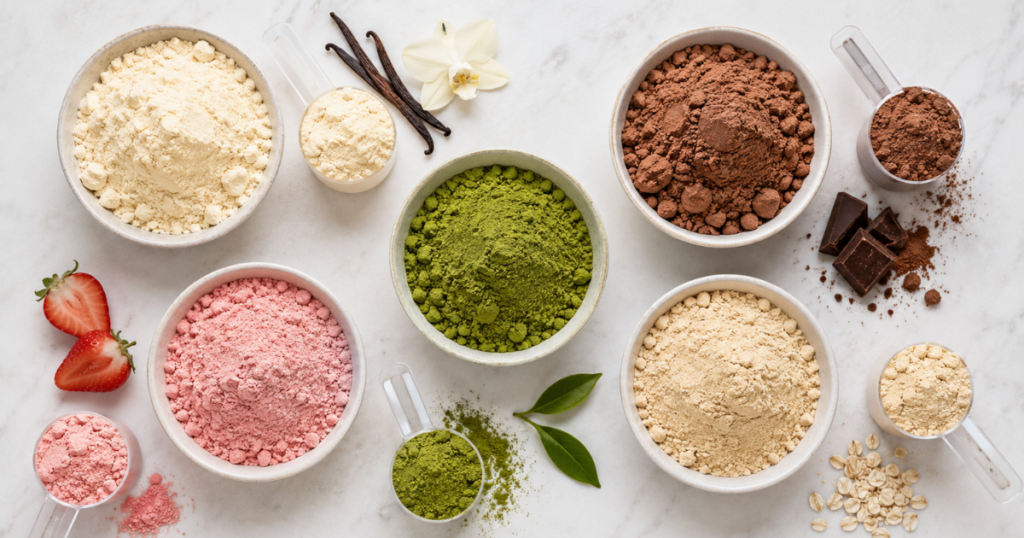
For a first tub or bag, pick a flavor you’ll actually finish. That single rule fails less often than any comparison of ingredients. Knowing the differences still helps, so here are the 3 main types from a beginner’s angle.
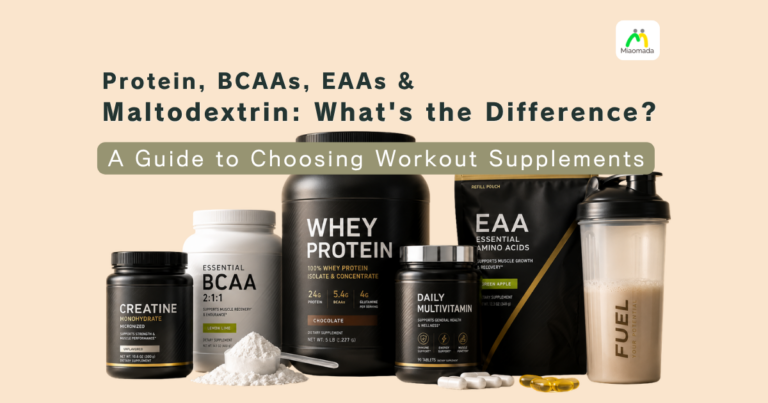
- Whey (from milk): absorbed relatively quickly, and often used after exercise. It comes in the widest range of flavors and tends to mix smoothly
- Soy (from soybeans): absorbed more slowly, which is why some people choose it to stay full longer. Plant-based, so it also suits anyone cutting back on dairy
- Casein (from milk): absorbed slowly, and sometimes used before bed, when the point is to top up over a long stretch
There’s no right answer here. Choose based on your goal, how your body handles it, and taste. The first purchase is the one that decides whether there’s a second one, so buy the flavor you want to drink.
When to Drink It, by How You Live
There’s no single correct time, and choosing one that fits your day is most of what keeps it going. The common patterns:
- Morning: breakfast is where protein is most likely to fall short, and a drink is easy to mix on a day with no time to cook
- In place of a snack: instead of something sweet in the afternoon, since protein tends to keep you full longer
- After exercise: for anyone who walks or lifts, as the top-up when you get back
More on the thinking behind each one in When Is the Best Time to Drink Protein? 4 Patterns, and What the Latest Research Concludes.
The Real Obstacle Is the Hassle
Starting protein is easy. Sticking with it is the hard part, and if this article has you thinking about trying it, this is where it would fall apart.
The reason is rarely willpower. It’s the hassle. Open the tub or bag, level off a scoop, pour it in without spilling, wash the scoop, and close it again. Written down, it’s short. Inside a busy day, it’s a quiet drag, and powder scattered across the counter doesn’t help either.
The good news is that if you take the hassle out, protein gets much easier to keep up. More on why the habit breaks for structural reasons rather than personal ones in Why You Stop Drinking Protein, and How to Stay With It.
Letting a Tool Carry the Hard Part
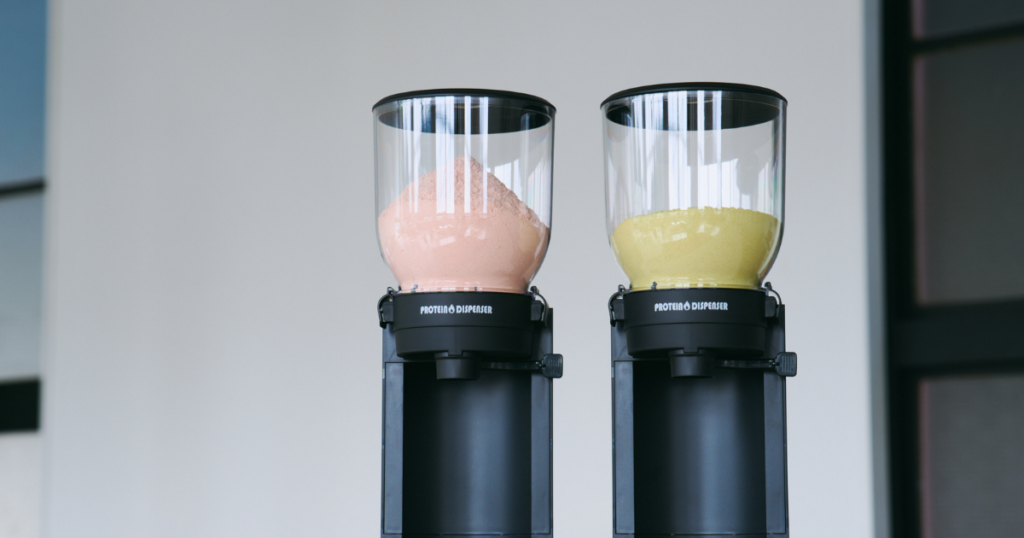
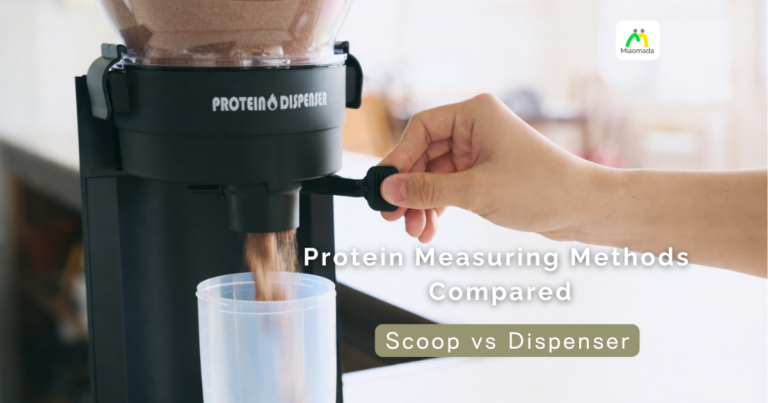
A protein dispenser takes the measuring and the cleanup off you in one move.
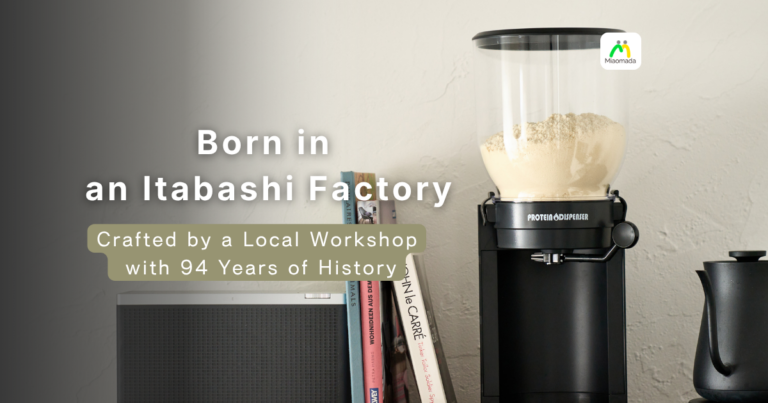
The ALENNE Protein Dispenser gives a consistent dose of protein with each pull of the lever. No scoop, and no opening and closing the tub or bag. Your hands never touch the powder, whether you’re refilling it or using it, so it stays hygienic sitting out on the counter. Put it somewhere you already pass every day, and reaching for it without thinking becomes a lot more likely.
It’s built to sit out, too, so leaving it on the counter doesn’t make the kitchen look cluttered. If ‘I want to keep this up and the hassle keeps stopping me’ sounds familiar, this is a good place to start.
In Summary: Fill the Gap, Then Make It Easy to Repeat
Protein builds skin, hair, and nails as well as muscle, and it’s the base that keeps a body running. Eat light and you can fall short of it, and powder is a straightforward way to make up the difference.
Gaining weight and bulking up are mostly unfounded worries, and swapping a snack for a serving can help you hold your calories down instead. Choose a type based on your goal and your taste, and treat the amount as whatever your meals didn’t cover.
Then the part that matters most: sticking with it. Most of what stops people is how much of a chore it feels like. If that’s what you want gone, a protein dispenser is one way to get rid of it. Build the habit one manageable serving at a time.
Related reading:
- When Is the Best Time to Drink Protein? 4 Patterns, and What the Latest Research Concludes
- Why You Stop Drinking Protein, and How to Stay With It
The ALENNE Protein Dispenser
The ALENNE Protein Dispenser is Miaomada’s flagship product: pour straight from the bag or tub into the hopper, pull the lever to measure your dose, and keep it on the counter as part of your daily routine.
The patented dosing mechanism measures a consistent dose with each pull of the lever. If the hassle is the thing standing between you and a daily serving, that’s the part it takes away.