
Protein Dispenser Development Story [Part 2] — DP-M2: From Setback to the World
Part 1 covered how DP-M1 (born inside a contract-manufacturing town factory) reached 133 backers on Makuake. Part 2 picks up there: the failed attempt at motorization, the DP-M2 that grew out of it, and the move into the US market.
The Push for an Electric Dispenser — and Why It Failed
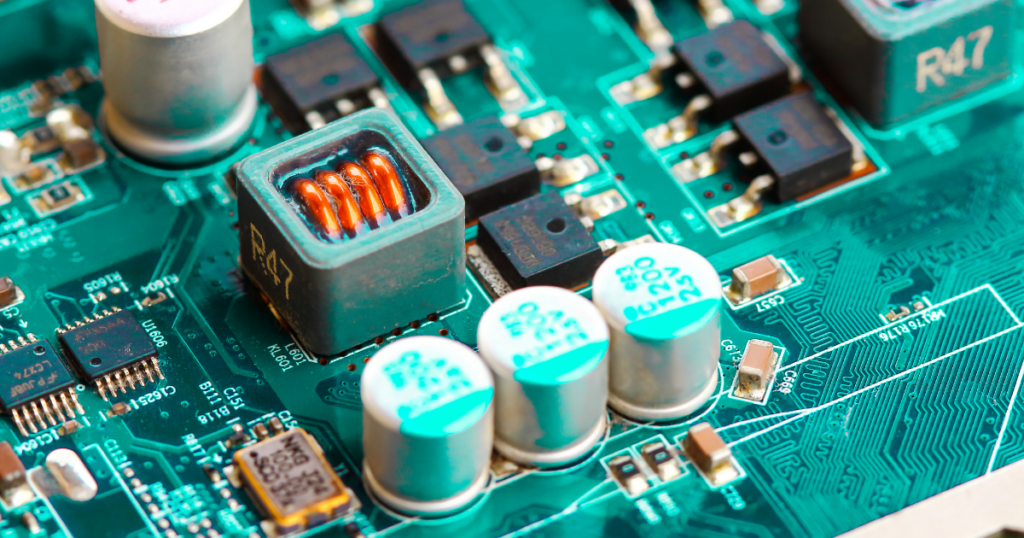
With DP-M1 done and the mid-campaign mold revisions behind us, the next idea was motorization. A completely different product from DP-M1: a protein dispenser where one button finished the job.
The wall here was steep. Showa Denki, the parent company, is plastic molding, metal fabrication, assembly: contract manufacturing. Zero in-house electrical engineering. No circuit experience, no idea where to outsource the board work or wiring.
We started anyway. Trial and error.
DP-M1 measures with a pendulum-style lever swung side to side. Motorizing that meant changing the architecture: a dosing chamber that rotated a full 360 degrees, driven by a motor.
We got something moving. The motor itself was the problem. Spinning the dosing chamber while the hopper held a kilogram of protein required a sizable motor, large enough to wreck the unit’s price by itself. And we didn’t know how to stop the motor at precise positions.
Two or three months in, we couldn’t get past the cost wall and the controls wall, and the motorization effort was shelved. In hindsight, a gearbox would have let us run a small motor at the right torque, but we didn’t have that knowledge at the time.
Wanting the US Market Anyway
Even after dropping the motor, the US market wouldn’t leave my head.
Six to seven times the size of Japan. Higher health awareness, far more daily exercisers per capita. On market size alone, the US could move dramatically more units than Japan.
But DP-M1 couldn’t go there, the Israeli company’s US patent ruled it out. To enter the US, we needed an original dosing mechanism that didn’t infringe.
The DP-M2 Insight — Born From the “Failure”
DP-M1 still had open issues.
First, dose consistency. Even after the post-Makuake mold revisions, two flavors out of about a hundred wouldn’t dose reliably. Same brand, different flavor, completely different powder behavior. And later we learned that the same flavor can change from lot to lot. We asked the protein manufacturers about it: yes, the source ingredients themselves do change. We needed something more robust.
Second, scatter. DP-M1’s pendulum lever traveled directly above the spout, required by the design to prevent leakage, but it forced a longer drop from spout to shaker, which scattered powder. We wanted a nozzle. The pendulum architecture made one hard to add.
Working through both problems, the idea hit:
The 360-degree rotation we tried for the motor, what if we did it manually?
A ratchet-style lever could turn the dosing chamber over a small angle of motion. The architecture would be free of the pendulum’s structural constraints, and the spout would be free to redesign.
Our patent attorney confirmed that the manual ratchet-driven 360-degree mechanism was distinct from the existing US patent. The US market was suddenly back on the table.
Dosing problem: solvable. Scatter: solvable. US-eligible. This is it. DP-M2 development started right then, May 2023.
Powder That Wouldn’t Fall — Round Two
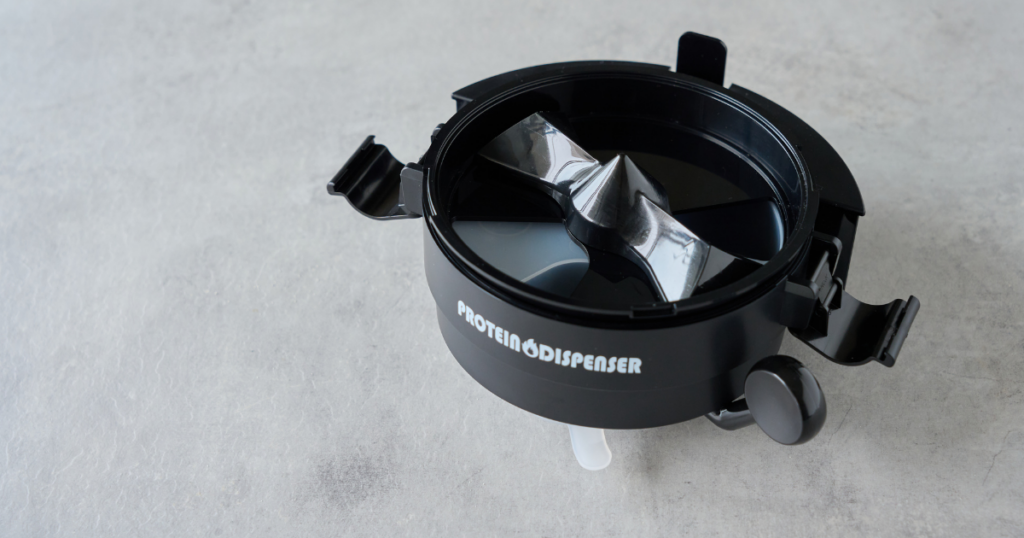
The 360-degree mechanism came together as designed and prototypes followed. And the same problem from DP-M1 came back with it: powders that wouldn’t fall.
The flavors that DP-M1 couldn’t handle still wouldn’t fall. Switching to rotational dosing didn’t change the powders themselves.
The fix was a complete rebuild of the agitator. DP-M1 had an agitator too, but DP-M2’s blades were rethought from the ground up, reshaped to track the inner contour of the hopper, actively stirring the powder near the bottom. Whatever the powder, it now fell consistently.
There aren’t many products in the world that mechanically dose powder. Most products still hand it off to a scoop. Building a protein dispenser that handles arbitrary powder types reliably felt, to us, like a real breakthrough.
January 2024, after about eight months of development, DP-M2 was finished.
Patents — Japan Granted, US Pending
After development settled, we went back to the patent attorney. He thought we had something patentable. This time, the US filing was the goal from day one.
Filed in Japan May 2024. Through expedited examination, registered November 2024 as Japan Patent No. 7580860. Right after registration, we filed in the US. That application is currently under examination.
Back at the start of DP-M1, we didn’t know patents were jurisdictional. Now we have a Japanese patent and an active US application. The IP strategy grew up alongside the product.
Makuake, Round Two — 179 Backers Said Yes
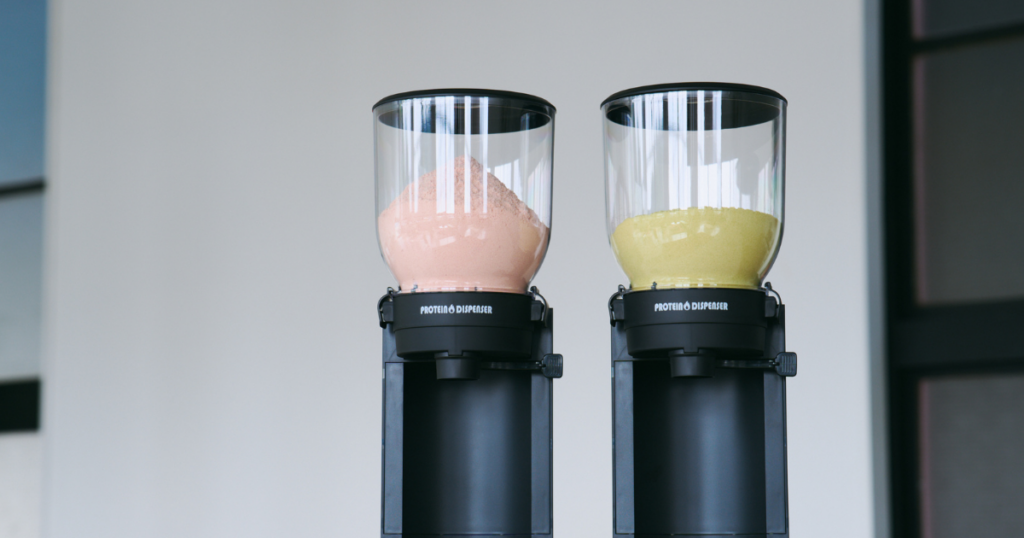
November 2024: DP-M2 launched on Makuake. Two-month campaign. Final result: 179 backers, ¥2,947,500 in total pledges. Versus DP-M1’s 133 backers and ¥1,895,000, that’s 35% more backers and 55%+ more revenue.
We finished shipping to backers in March 2025 and started general sales on Amazon and Rakuten in May.
The ALENNE Brand
After DP-M2 launched, we started thinking about extension, protein dispenser today, sports goods or other categories tomorrow. That meant we needed a product brand. After a long search, we landed on ALENNE: a coined name combining “Ally” and “Endurance,” the idea of being on the side of people who keep at it. Trademark registered in Japan in February 2026, with a US filing planned next.
The Next Stage — Kickstarter and the World
From Showa Denki the contract manufacturer, to Miaomada the product company, to ALENNE the consumer-facing brand.
The next stage is US Kickstarter. A platform full of innovators and early adopters worldwide, where we’ll put a brand-new product category, the protein dispenser, in front of an international audience. Makuake was educational, but a different language, a different market, and a different culture make this a fresh fight.
Pre-launch went live in April 2026. The main campaign starts in May.
Looking back: without those two or three months of failed motorization, the 360-degree rotation idea wouldn’t have surfaced. Without it, DP-M2 wouldn’t exist. Without DP-M2, the US wouldn’t have opened up. The failure built the next product, and the next market. Manufacturing tends to work like that.
And one more thing: the electric version isn’t dead. We still want to build it.
Make the Morning Protein Easier
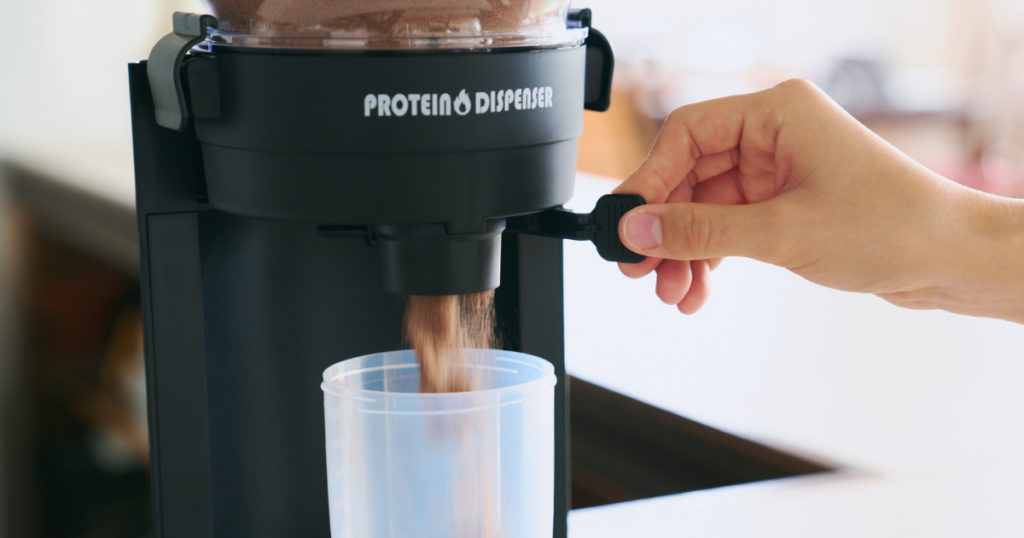
The ALENNE Protein Dispenser turns daily measuring into a five-second, one-handed motion. No scoop, no spill, no inconsistency, thanks to a patented dosing mechanism.

![Inside Two Successful Makuake Crowdfunding Campaigns [Part 2]: DP-M2, Building for the World](https://en.miaomada.co.jp/wp-content/uploads/2026/04/260428_008_part2_en-768x403.png)

![Inside Two Successful Makuake Crowdfunding Campaigns [Part 1] — DP-M1, Setting Off From Zero Recognition](https://en.miaomada.co.jp/wp-content/uploads/2026/04/260424_008_part1_en-768x403.png)