
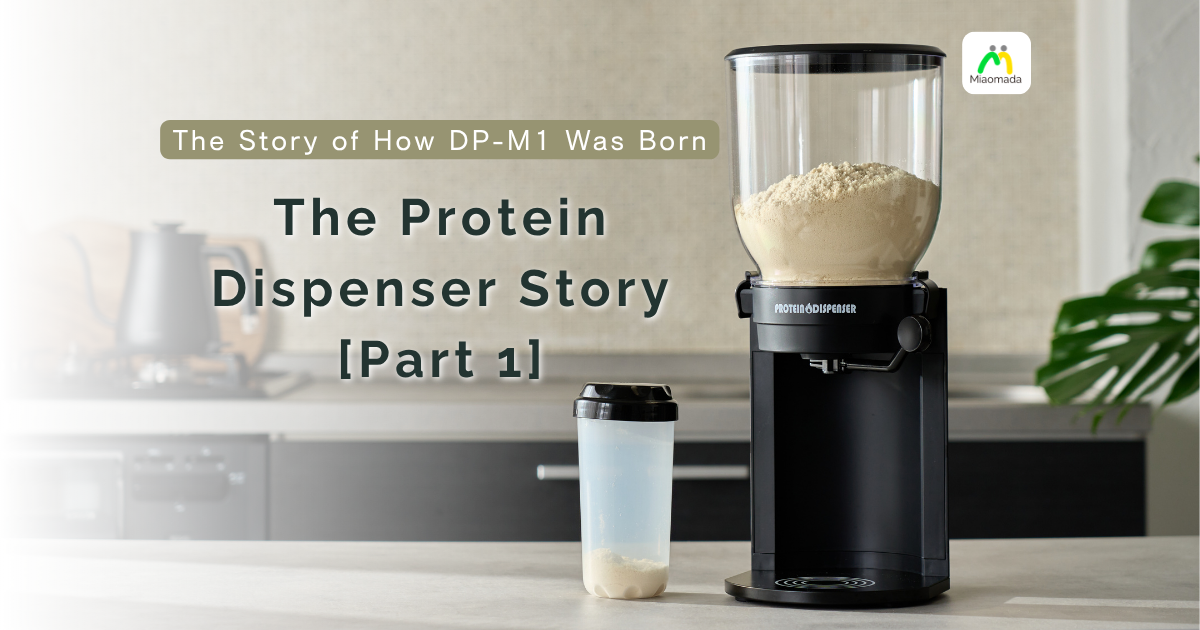
Protein Dispenser Development Story [Part 1] — How DP-M1 Came to Be
Keiichiro Honda, Miaomada’s founder, started drinking protein in his mid-forties.
He’d always liked moving. Years of jogging led him, almost by accident, to a gym near his home, and from there into serious lifting. Watching his muscles actually grow turned the routine into something genuinely fun. He learned that protein helps muscle development, so he started drinking it.
The benefits were obvious. The morning ritual, on the other hand, was a different story. Open the bag, find the scoop, level it off, pour it into the shaker, all of that, every single morning.
“The drink takes five seconds. The prep takes a minute.”
He’d start, give up after a few days, restart, give up again. Eventually it clicked: this wasn’t a willpower problem. The system was the problem.
“Let’s Build Our Own Product” — The Business Planning Office

He didn’t set out to build a protein dispenser.
Miaomada’s parent company, Showa Denki, is a 94-year-old contract manufacturer in Itabashi, Tokyo. Metalwork, plastic molding, assembly: they have the manufacturing chops, but no product carrying their own name. Wanting to make their own product had been an undercurrent at the company for years.
Wanting and doing are different things. To break the inertia, the Showa Denki president set up a Business Planning Office. Honda was assigned there with one directive: forget your old job, build a new product.
He floated several ideas, made prototypes, but nothing felt like the right one. Until one day:
“Nobody’s actually built a tool that makes measuring protein easy.”
The friction he’d been feeling every morning had finally turned into a product idea. September 2021.
A Prior Product Surfaces — The Israeli Dispenser
He’d assumed nothing like it existed. A quick search proved him wrong: an Israeli manufacturer was already making one.
His first reaction was “Done already?” But it wasn’t sold in Japan, so he ordered one through personal import.
When the unit arrived, problems stacked up fast.
- Powder leaks: every lever pull spilled protein from the seams.
- Free-flowing powders gushed: if you stopped the lever halfway, powder kept falling.
- Shaker didn’t fit: no clearance under the spout.
- No disassembly: screwed together. Couldn’t break it down to clean.
- Powder residue: powder pooled in the body near the end of the bag.
His honest first impression was “This isn’t actually usable.” And right next to it: “We could build a competitive version of this.”
The Patent Wall, and One Sentence from a Patent Attorney
The product made the problems clear. But research turned up that the manufacturer held a US patent. If a patent existed, didn’t that block the project?
Honda knew nothing about IP at the time. He went to a patent attorney and got an answer he wasn’t expecting.
“Patents are filed country by country. That manufacturer doesn’t have a Japanese patent, so developing and selling your own design domestically is completely fine. You just can’t sell it in the US.”
Patents are jurisdictional. Even that basic fact had been new to him. As long as it was Japan-only, an original mechanism was fair game. With that, development moved fast.
The Powder Problem — Months of Prototyping
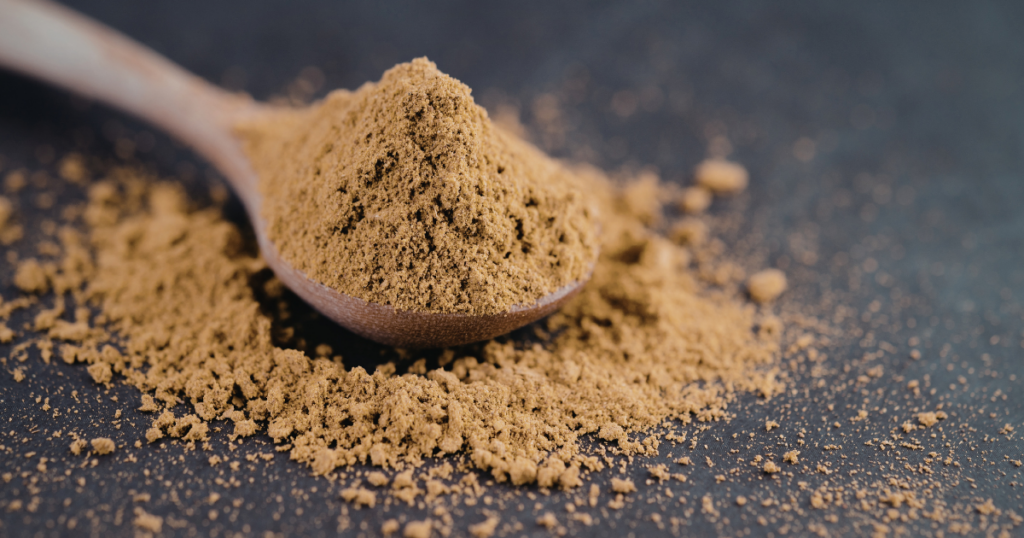
The mission was clear: build an original dosing mechanism that fixed every flaw of the imported unit. The execution was another year of fights.
The first wall was powder leakage. Every motion of the dosing parts caused powder to escape from places that weren’t the spout. Lever positions changed. Connections changed. Round after round of prototypes, the same complaint: “still leaking, still leaking, can’t ship this.”
Once leakage was solved, dose consistency took its place. Every pull gave a slightly different amount. They set numerical targets and ground out more prototypes to hit them.
Development started September 2021. A near-final prototype was ready by March 2022. Six months of nothing but powder.
Tooling, Incorporation, and a Trademark
April 2022: the team started building injection molds for production. Showa Denki led the tooling. Plastic parts came out of the Yabuki facility in Fukushima, the metal base out of the Iwase plant. Final assembly was consolidated at Yabuki.
Alongside production, work began on the “Protein Dispenser” trademark. Registered December 2022 (Japan Trademark No. 6648352). The name almost reads like a generic category. That was deliberate. The category itself didn’t really exist in the public mind. By naming it ourselves, we’d carve out the new market while shaping the language for it.
That same December, Miaomada Co., Ltd. was incorporated. Selling consumer products under “Showa Denki” wouldn’t work. It was a contract manufacturing brand. The new company was also a statement: we’re going to keep building our own products. Not just contract work. Products of our own.
But finishing the product wasn’t the end of the problem. “Protein dispenser” wasn’t a recognized category. Putting it on a shelf wasn’t going to move units. And Showa Denki had zero direct-to-consumer experience.
The conclusion: Makuake. A Japanese crowdfunding platform was the right entry point: innovators and early adopters first, Amazon for general availability after.
DP-M1 wouldn’t ship to the US. That was understood. But the US was already on the horizon. Research at the time pegged the US protein market at roughly six to seven times Japan’s. We wanted in. Not yet a plan, but the intention was there from the start.
A Major Issue Surfaced Mid-Campaign
November 2022: the DP-M1 Makuake project went live. A one-month campaign, with delivery scheduled by March 2023.
Mid-campaign, a serious problem appeared.
We’d developed against three protein varieties. To prepare the dosage chart that would ship with the product, we bought roughly a hundred more and ran them through. Several wouldn’t dose at all. The powder simply wouldn’t fall.
Protein powders vary wildly in texture from brand to brand and flavor to flavor. Three varieties wasn’t a representative sample. The world’s protein wasn’t.
We pushed an emergency mold revision and had to revise some of the published specifications. Changing the design mid-crowdfunding was as stressful as it sounds.
The First Verdict: 133 People
After the mold revisions, DP-M1 shipped. The Makuake campaign closed with 149 units sold to 133 backers, totaling ¥1,895,000 in pledges.
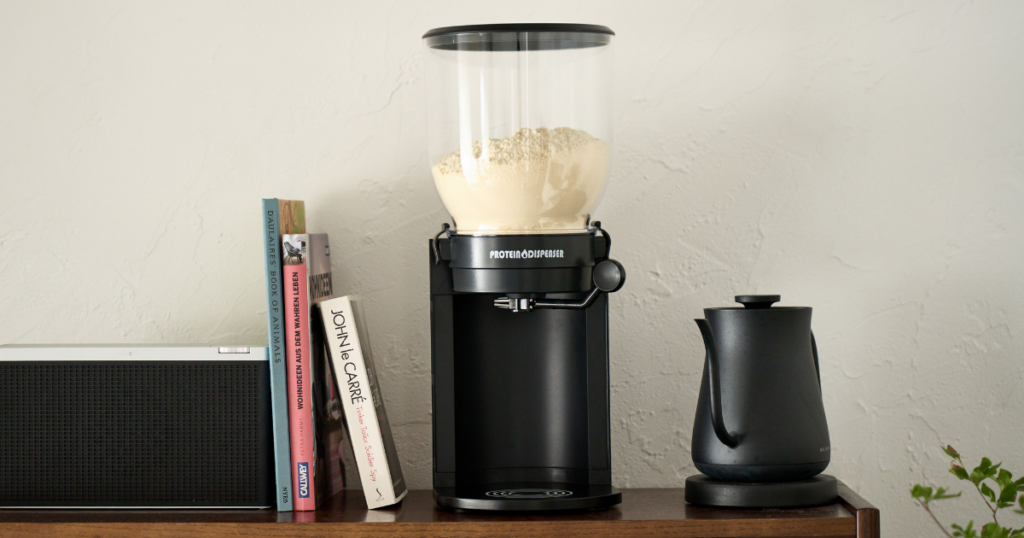
We genuinely had no idea whether it would sell. The shift from B2B contract manufacturing to direct-to-consumer was uncharted territory. Even pricing was a relearn: tax-exclusive math is the B2B default, B2C uses tax-inclusive. Wholesale vs. retail margins, individual shipping costs. Manufacturing common sense and consumer business common sense are not the same kind of common sense.
Even so, 133 people had said “yes.” That mattered more than the numbers. April 2023, general sales started on Amazon.
By the time every backer had received their unit, the next concept was already moving. An electric version. That push toward motorization is what eventually led to DP-M2.
Next: Development Story Part 2 — DP-M2: From Setback to the World, where the failed motorization attempt unexpectedly opens the path to the US Kickstarter.
Make the Morning Protein Easier
The ALENNE Protein Dispenser turns daily measuring into a five-second, one-handed motion. No scoop, no spill, no inconsistency, thanks to a patented dosing mechanism.
![Inside Two Successful Makuake Crowdfunding Campaigns [Part 1] — DP-M1, Setting Off From Zero Recognition](https://en.miaomada.co.jp/wp-content/uploads/2026/04/260424_008_part1_en-768x403.png)


![What Is a Protein Dispenser? How It Works and Why It Matters [Complete Guide]](https://en.miaomada.co.jp/wp-content/uploads/2026/05/What-Is-a-Protein-Dispenser-768x403.png)