What Actually Matters in Protein Storage Wasn’t “Sealing It Tight”
Search “how to store protein” and the same advice surfaces every time: keep it airtight. Avoid moisture. Avoid pests. Avoid oxidation. The reasoning is straightforward.
But over two to three years of running a dedicated protein storage and dosing device (our protein dispenser), the picture has shifted a bit. For typical month-long usage cycles, airtightness probably matters less than keeping human hands out of the powder. That’s the case I want to make today.
Is “It Has to Be Airtight” Actually True?
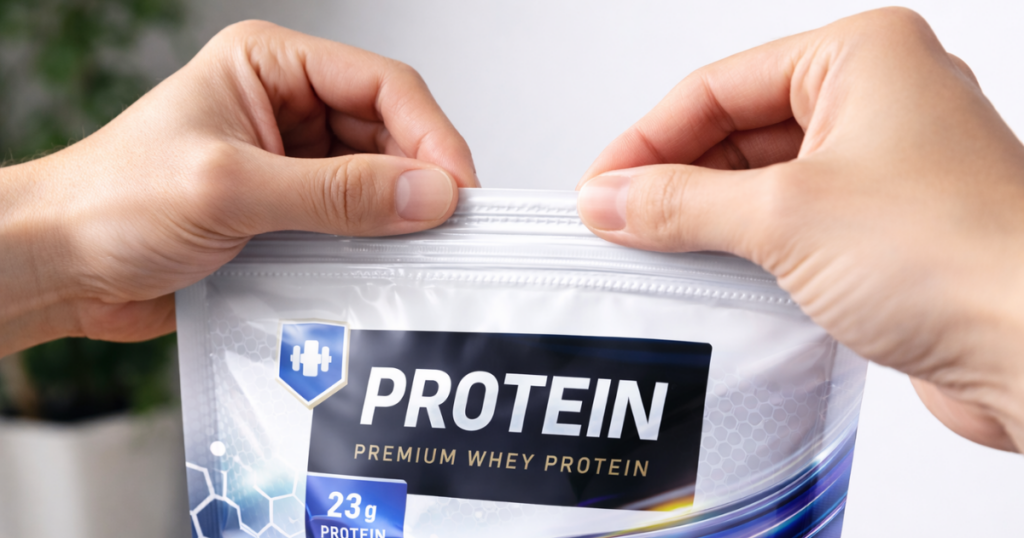
To be clear, I’m not saying airtightness is meaningless. For long-term storage, or hot and humid environments, sealing matters.
The reality, though: people open a bag of protein and finish it within a month. That’s the typical usage. In that pattern, we almost never hear of powder going bad due to insufficient sealing. We’ve been running our own dispenser for two to three years now, and we haven’t once had an issue with clumping, off-flavors, or oxidation. Even though the hopper isn’t strictly airtight.
The reason every storage guide leans hard on “seal it, seal it” is that they’re assuming the worst case: months of neglect through a humid summer, lids left open, that sort of thing. Reasonable advice in the abstract. Applied to a normal “use it within a month” cycle, it’s probably overkill. That’s the view from someone drinking protein every morning.
So Where’s the Real Risk?
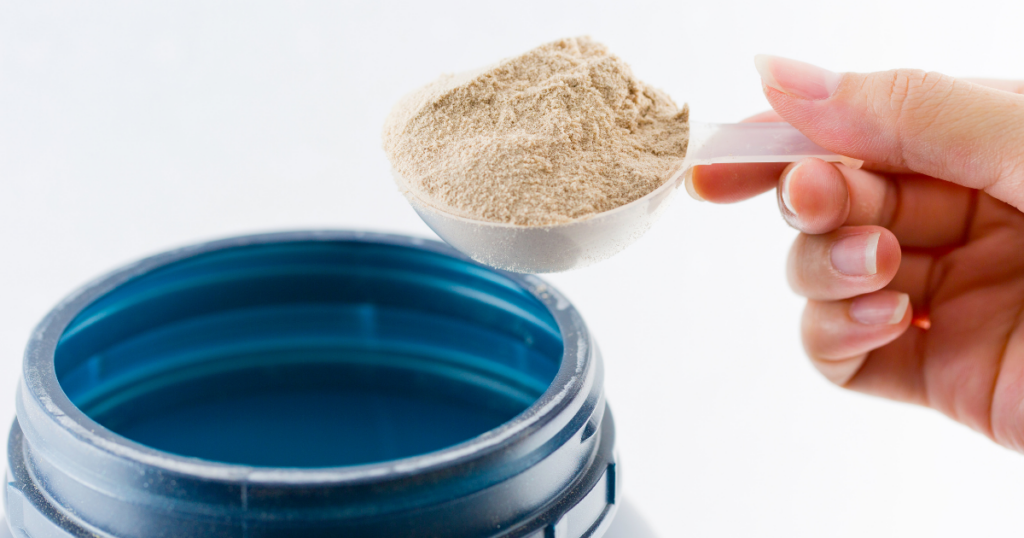
What two to three years of daily use has shown us is this: what really moves the needle on protein quality is how often human hands touch the powder.
Hands Carry More Than People Realize
Human hands have resident bacteria and a layer of sweat and oils. Before and after cooking or exercise, hands also pick up things you’d rather not think about. Even washed hands don’t get fully clean.
The instant a hand touches the powder, bacteria, moisture, and microscopic particles all enter at once. With the right temperature and humidity inside the container, bacteria multiply. That’s a hygiene risk, not a storage risk.
Most Common Storage Methods Are Built Around Touching the Powder
Take a closer look at how protein is usually stored: every method assumes a hand goes in.
- Scooping straight from the bag: your hand brushes the bag opening, and the hand holding the scoop passes over the powder.
- Decanting into a storage container: your hand tilts the bag, then opens the lid, then puts a scoop in.
- Kitchen measuring cups: pouring and transferring put your hand close to the powder unavoidably.
“I’m fine, I moved it to an airtight container.” But every dose means opening the lid, putting a scoop in, closing it again. Each cycle, your hand moves close to the powder. You sealed the container, but the contamination path is still wide open every time you open it.
The Idea — “Hands-Free Storage and Measuring”
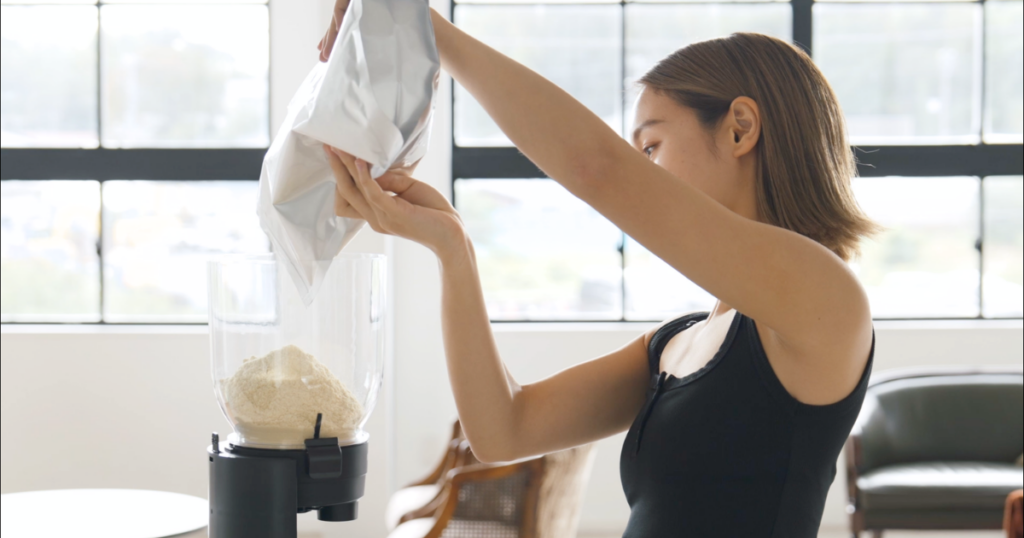
That’s what changed how we think about this.
Don’t try to maximize the seal. Just design the system so hands never come near the powder.
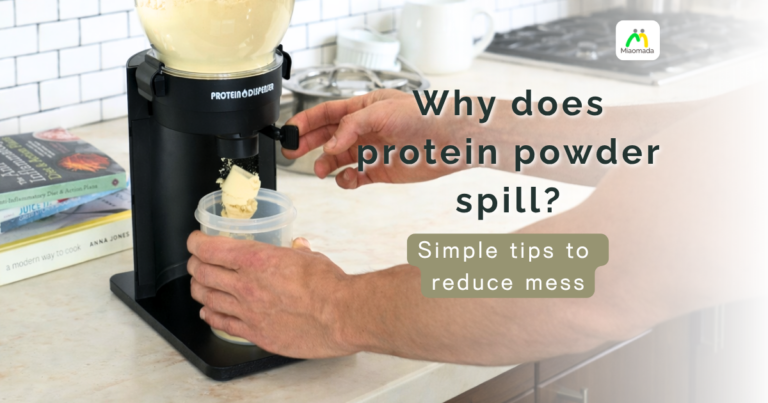
The ALENNE Protein Dispenser is built around exactly that idea.
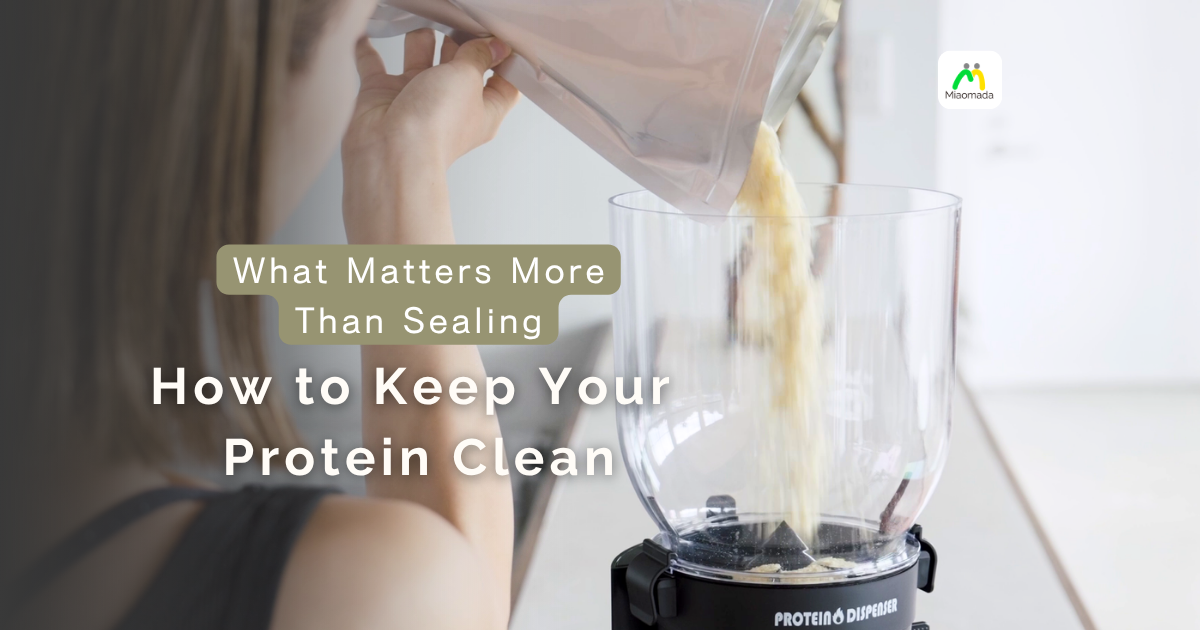
- Open the bag, pour straight into the hopper: your hand never touches the protein itself.
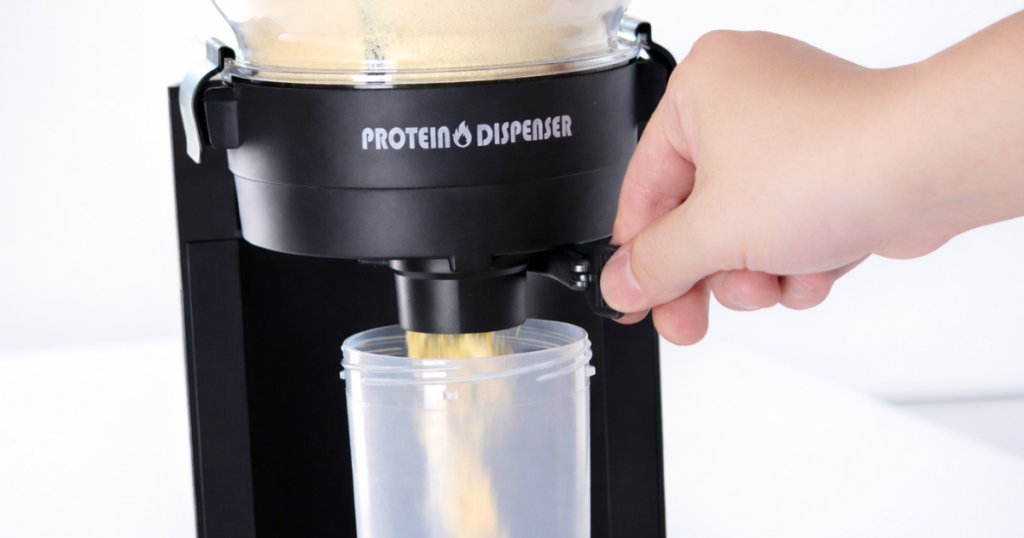
- Measure by pulling a lever: no hand ever enters the powder’s path.
- Touch nothing until the unit is empty: from purchase to the last drink, the powder never makes contact with a human hand.
The hopper isn’t a strict airtight container. The reason we haven’t had moisture or oxidation issues over two to three years is, as we read it, that the contamination source, the hand, has nowhere to enter.
For more on how the dispenser works in general, see What Is a Protein Dispenser? How It Works and Why It Matters.
Where Sealing Still Matters
To be fair, there are situations where airtightness still earns its keep.
- Storage longer than three months (stockpiling).
- Humid summer or rainy-season environments with no air conditioning.
- Storing unopened bags in a cool, dark place: the fridge is fine for unopened bags, but once opened, take it out and store at room temperature to avoid condensation.
Long-term storage and extreme environments are still cases where sealing matters. But for the common “one bag per month” cycle, our experience is that a hands-off hygiene design does more for quality than a tighter seal.
Three Things to Stop Doing
Three habits worth retiring, when you reframe the question as hygiene rather than sealing.
Don’t 1: Wet hands or wet scoops touching the powder
A wet hand or scoop introduces moisture and bacteria simultaneously. Be especially careful right after washing your hands or rinsing your shaker.
Don’t 2: Reusing the scoop without washing it
A scoop that touched the powder once, used again next time without washing. People assume “it’s dry, it’s fine,” but the scoop already carries powder traces, ambient moisture, and bacteria from last time.
Don’t 3: Leaving the bag open
You start measuring, then walk over to grab the shaker, then to the sink for water, and the bag stays open the whole time. Even a few minutes is long enough for airborne particles, stirred up by movement nearby, to settle inside.
The thread tying these together: each one opens a path between the surroundings and the powder. Tightening the seal doesn’t help once the path is open. Removing the path entirely is the better answer.
For dealing with spills and powder scatter, see The Protein Spill Problem: Let’s End It.
Wrap-Up: Don’t Let Hands Touch the Powder
When people think “protein storage,” “airtight” and “dark” and “room temperature” come to mind first. Those things matter. But after two to three years of running a protein dispenser day in and day out, what we’d say is this: for typical daily use, what governs quality isn’t how tightly it’s sealed, but rather how often a hand touches the powder.
The more often you drink protein, the more open-and-close cycles. The more cycles, the more hand-to-powder contact. So the cleanest answer might also be the simplest: build a system where your hand never has to touch it.
Hands-Free Storage and Measuring, in One Device
The ALENNE Protein Dispenser lets you pour protein straight from the bag into the hopper, then measure by pulling a lever. From the first dose to the last, the powder never comes into contact with your hands.
Two to three years of in-house testing as the manufacturer, and a different way to think about protein storage.