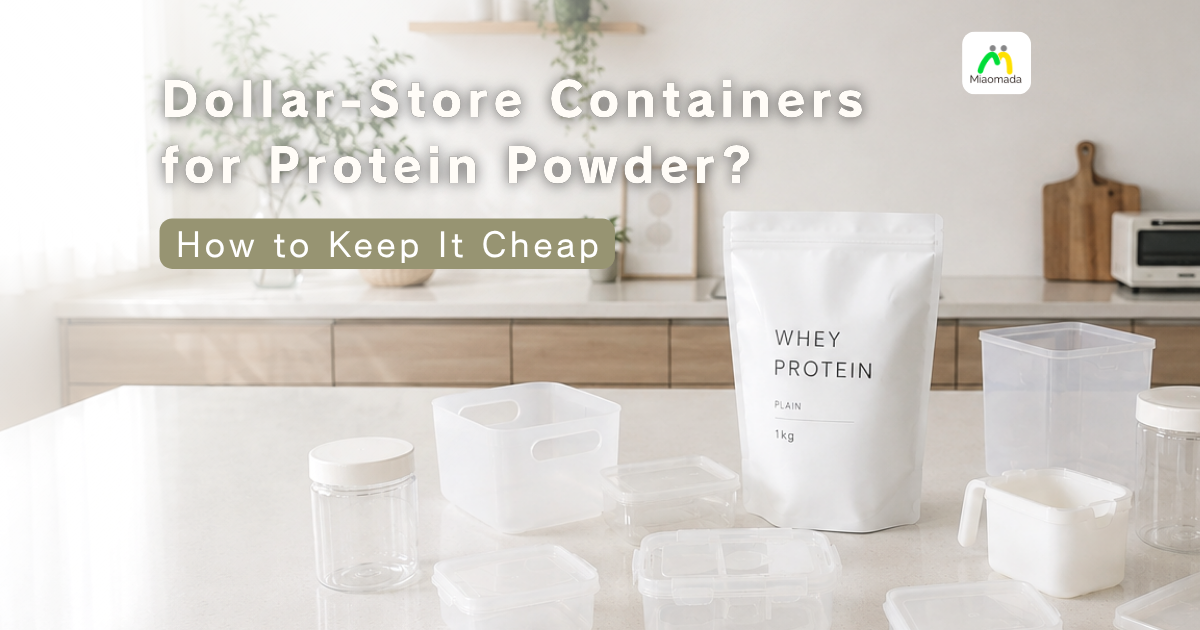
Are Dollar-Store Containers Enough for Storing Protein Powder? What You Give Up, and What You Don’t
The bag takes up space, you can’t tell how much is left, and powder gets caught in the zipper so it won’t close properly. Plenty of people look at those annoyances and wonder whether a cheap container from the dollar store would fix them.
Search around, and you’ll find lots of people saying a dollar-store container is all you need for protein powder. Most of them are right. A container from one of Japan’s dollar-store chains (Daiso, Seria, Can Do) does a solid job as a box to keep protein in, considering what it costs.
In this article, I’ll sort out how far a dollar-store container gets you, what you give up for that low price, and what you don’t have to give up at all, from the perspective of a company that went through 19 prototypes of its powder-dosing mechanism.
Can You Store Protein Powder in a Dollar-Store Container?
As a storage box, yes. You can see how much is left, it takes up less room than the bag, and it costs a couple of dollars to get started. It won’t seal the powder in completely, but if you go through a bag in about a month, that rarely causes a problem.
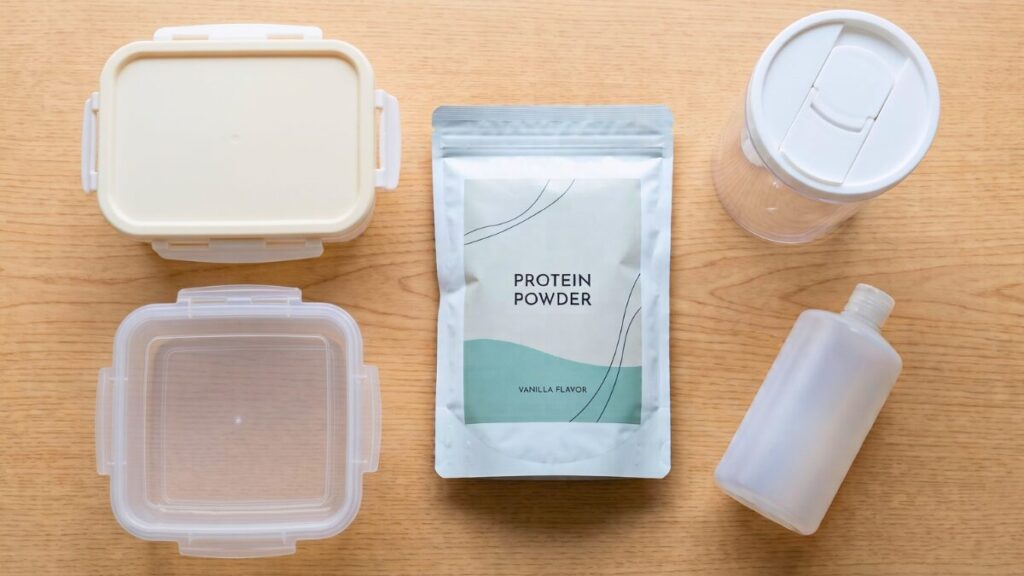
Dollar stores carry a full range of containers that can hold powder: gasket-lid containers, clear canisters, containers with a one-push flip lid, and refill bottles. Move your protein out of the bag into one of these, and it looks tidier and you can see at a glance how much you have left.
People say a dollar-store container is enough for protein because, for the price, it’s a good box to keep powder in. Nothing to argue with there. So first, let’s look at exactly what that low price buys you.
What Does a Dollar-Store Container Give You for the Price?
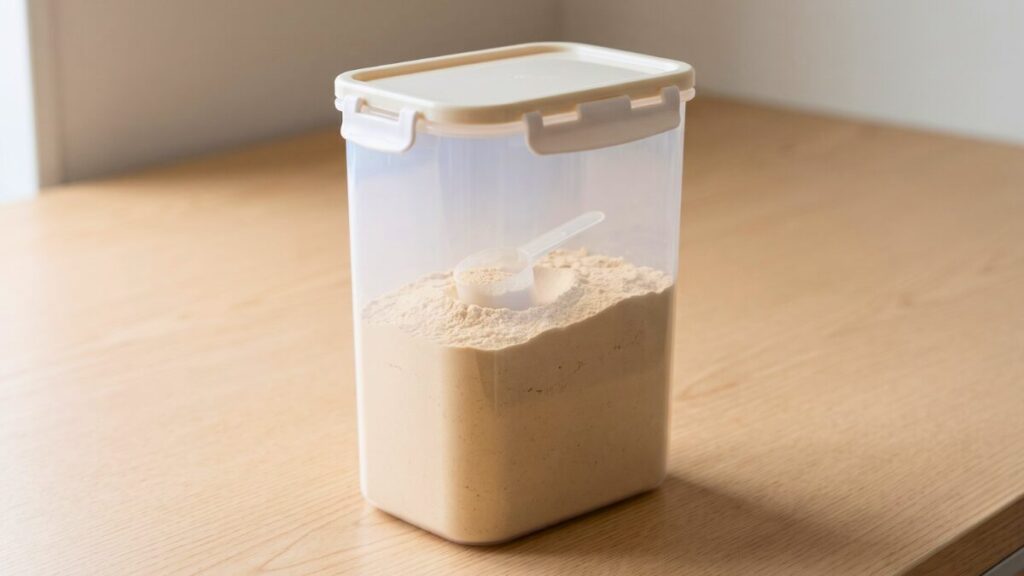
Move your protein from the bag into a dollar-store container, and you can see what’s left at a glance, powder stops jamming the zipper, and opening and closing gets smoother. For a couple of dollars, the small frustrations of living out of the bag get cleared up in one go.
Use protein straight from the bag for a while, and little annoyances pile up. Moving it into a dollar-store container takes care of several of them outright.
- You can see what’s left: With a clear container, one glance tells you how much remains. In the bag, you tend not to notice until you’re almost out
- No more powder in the zipper: Fine powder caught in the bag’s zipper keeps it from closing properly, or leaves it open when you thought you’d shut it. Move the powder into a container, and the problem disappears altogether
- Smoother opening and closing: You just open the lid. No more unrolling the bag, opening it, and rolling it back up every time
- Plenty of shapes to choose from: Daiso, Seria, and Can Do carry one-push containers, refill bottles, and other shapes, so you can pick one that fits your kitchen or your gym bag
One capacity figure makes choosing easier. Protein is a fine powder that holds a lot of air, so fresh out of the bag and still fluffy, 1 kg (2.2 lb) comes to roughly 2.4 L (about 2.5 qt). A container that’s an exact fit means powder puffs up every time you scoop, so pick a size with a little room to spare and you’re less likely to regret it.
I’ve sorted out the finer points of each container type, what each is good at and where it falls short, in a separate article comparing 4 types of protein storage container. Dollar-store containers are an affordable way into two of those types: the food container with a gasket lid, and the large plastic tub.
What Do You Give Up With a Dollar-Store Container?
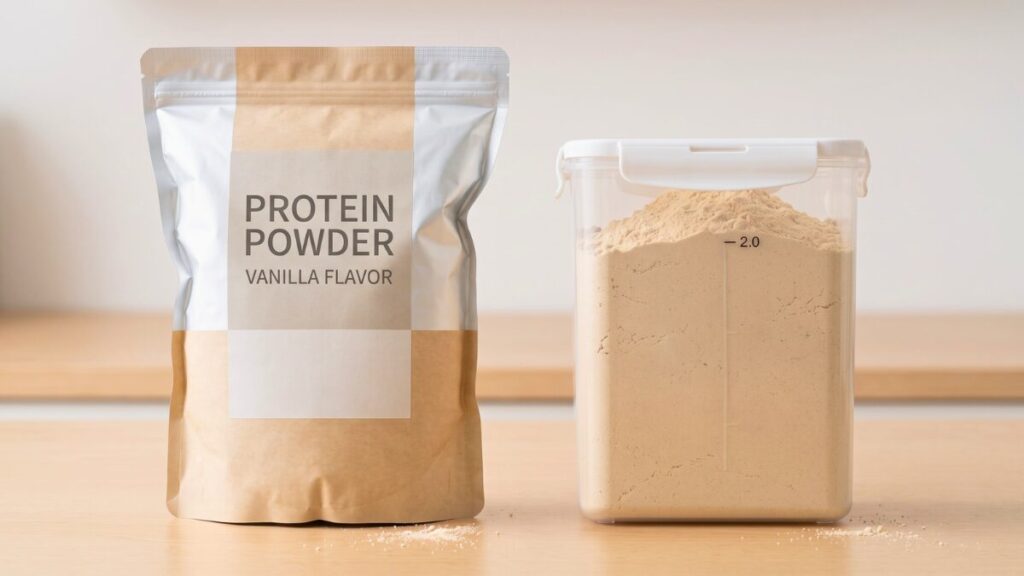
Two things, mainly. It isn’t fully sealed (so it isn’t well suited to long-term storage), and the capacity runs small, so a bulk buy won’t fit. For everyday use where you finish a bag in about a month, though, both are acceptable trade-offs for a storage box.
Cheap usually comes with a catch. With dollar-store containers, it shows up here:
- Not fully sealed: Even with a gasket, dollar-store containers aren’t built with long-term storage in mind. If you use up the powder in about a month, though, a container that isn’t fully sealed rarely causes trouble. It isn’t the right choice if you want powder to sit for a long time, so if that worries you, dropping a desiccant packet in with the powder may put your mind at ease
- Capacity runs small: Even the biggest dollar-store canisters top out around 2 L (about 2 qt, or half a gallon). Daiso’s clear canisters, for example, go up to 2 L at most. Since 1 kg of protein comes to roughly 2.4 L, a whole bag sometimes won’t fit. You rarely see anything bigger than 2 L at a dollar store, so if you buy in bulk, splitting the powder across several containers is the realistic answer
That said, these are things you can work around with the right size and a pace that uses the powder up. That’s the extent of what you give up for the low price, and as a box to keep protein in, it does the job. The basics, including why sealing isn’t the only thing that matters in storage, are in What Actually Matters in Protein Storage Wasn’t “Sealing It Tight”.
Storage Is Covered. Beyond That, It’s a Different Tool’s Job
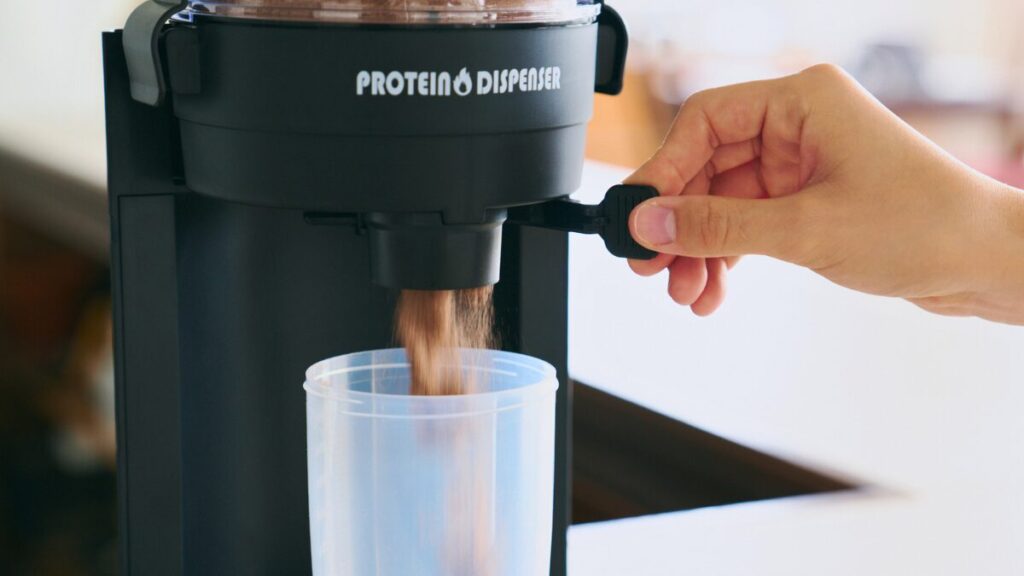
A dollar-store container gets you as far as keeping the powder. Once you want a clean, measured serving every time, with your hands never touching the powder, that’s beyond what a storage container is for.
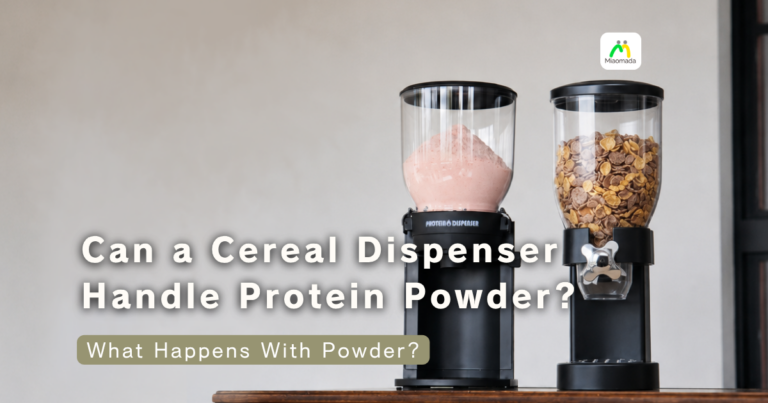
Change the container, and the morning motion stays the same: scoop out one serving with a spoon and tip it into the shaker. The fine powder that puffs up every time you open the lid, and the hand or scoop that touches the powder every time you dig in, have nothing to do with the container’s price. They come with the powder itself. This is the territory of a tool that measures and dispenses, not a box that stores, and that’s where a separate category, the protein dispenser, comes in.
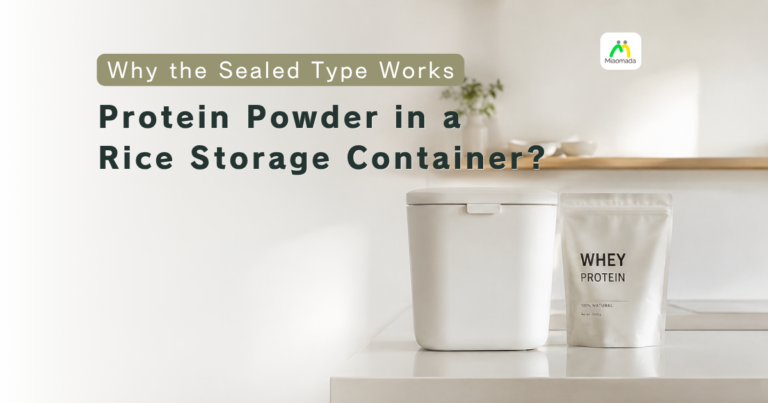
The same physics leads to the same conclusion with rice storage containers, the boxes Japanese households keep their rice in. The sealed type works as a box for protein, while the lever-type rice dispenser clogs and can’t be washed properly. I’ve written that split up separately. Dollar-store containers and rice containers make the same point from two directions: fine as a storage box, not a tool for measuring and dispensing.
When we built our protein dispenser, the part that took the longest was getting it to dispense a set amount, the same every time, without clogging. The dosing mechanism alone went through 19 prototypes, and the design we arrived at is registered as Japan Patent No. 7580860. That’s the territory of a purpose-built device, a different thing from a couple of dollars at Daiso.
In Summary: Enough as a Box, Not as a Dosing Tool
Can you store protein powder in a dollar-store container? The answer: as a storage box, it’s plenty. Measuring out a serving is a different tool’s territory.
- Dollar-store containers show you what’s left, keep powder out of the zipper, and cost a couple of dollars to start. As a storage box, they do more than their price suggests
- What you give up for the low price: they aren’t fully sealed (so they aren’t suited to long-term storage), and the capacity runs small. If you finish a bag in about a month, neither is much of an issue
- Once you want a clean, measured serving every time and hands that never touch the powder, you’ve gone beyond what a storage container does. That’s a different category, the protein dispenser
If you want to start cheap, a dollar-store container is all you need. If you reach the point where daily measuring, and keeping your hands out of the powder, are the chores you most want gone, remember there’s a purpose-built tool waiting one step further along.
Related reading:
The ALENNE Protein Dispenser
The ALENNE Protein Dispenser is Miaomada’s flagship product: pour straight from the bag or tub into the hopper, pull the lever to measure a set dose, and keep it on the counter as part of your daily routine.
The patented dosing mechanism measures one serving with a single pull of the lever. If a dollar-store box already handles your storage, and daily dosing and keeping your hands off the powder are the chores you want gone next, that’s the pair it was built for.