Inside Two Successful Makuake Crowdfunding Campaigns [Part 1] — DP-M1, Setting Off From Zero Recognition
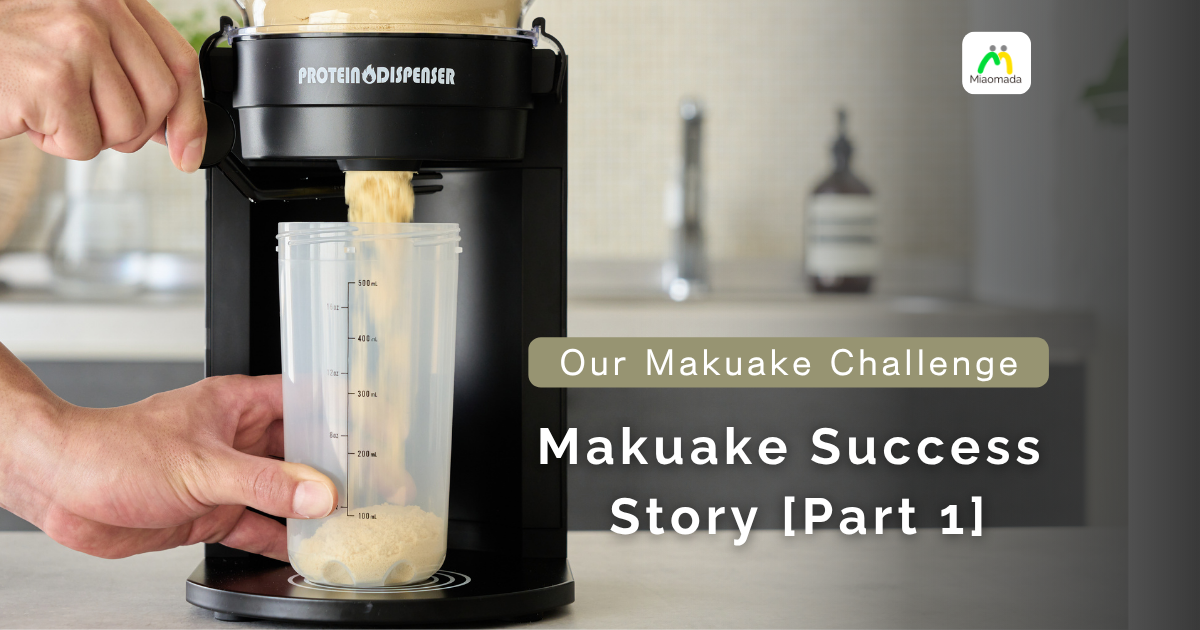
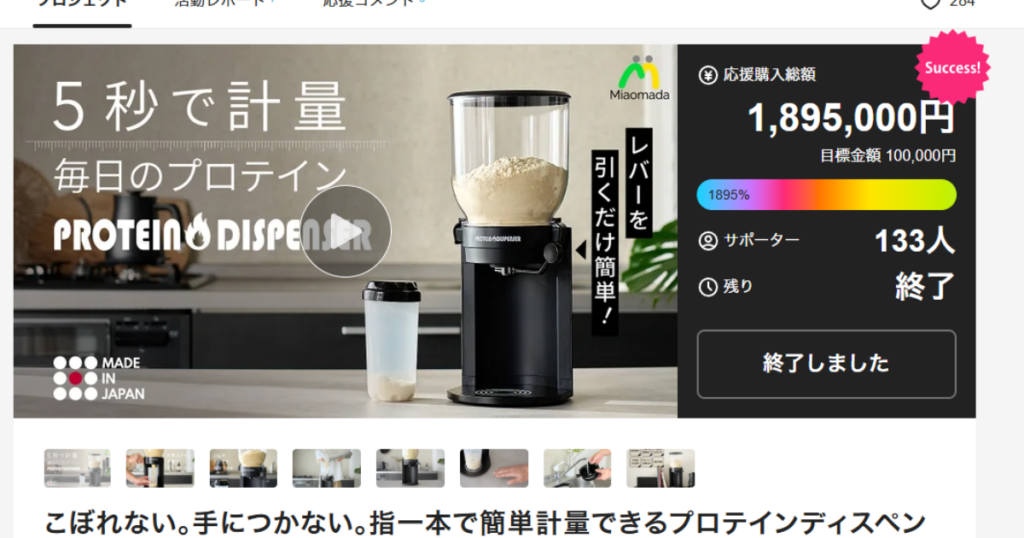
Miaomada has run two crowdfunding campaigns on Makuake (think Kickstarter, but Japanese) for our protein dispenser. The first, for DP-M1, finished with 133 backers and ¥1,895,000 (about US$12,600). The second, for DP-M2, brought in 179 backers and ¥2,947,500 (about US$19,650). In total, 312 backers and just over ¥4.84M (about US$32,000).
The numbers alone look clean. The reality was anything but. Mid-campaign spec changes, calculations done with the wrong tax base, a daily scramble. The whole thing was held together with adrenaline.
Part 1 focuses on the first campaign: DP-M1.
From 3D Printer to Mass Production: The Materials Wall
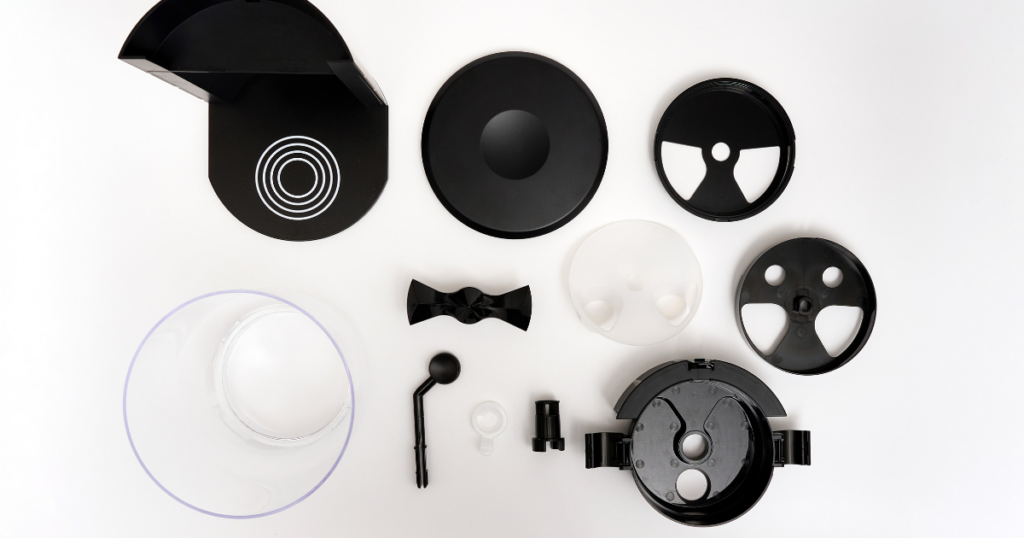
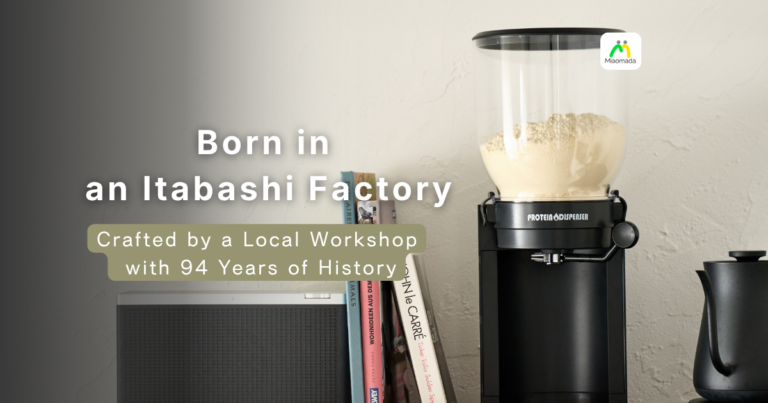
DP-M1 was prototyped on a 3D printer. Moving to mass production meant injection-molded plastic parts.
But, as this product touches protein directly, we had to use materials compliant with food-contact regulations under Japan’s Food Sanitation Act.
The housing is ABS, the hopper is PS (polystyrene), the dosing parts are PE (polyethylene), and the moving parts that need wear resistance are POM (polyacetal). PS and PE have plenty of food-grade options available, so they weren’t a problem.
ABS and POM were a different story. Across all domestic Japanese suppliers, we found exactly one food-grade resin grade for each. ABS simply isn’t a common food-contact material, so manufacturers never bothered developing variants for it. And naturally, that limited supply pushed material costs significantly higher.
15 Tools, ¥19.45M: The Day I Walked Into the CEO’s Office
Our internal designers ran flow analysis on the 3D models to determine optimal gate locations, ejector pin positions, and draft directions. From there, we split the tooling order between an outside mold shop and our parent company, Showa Denki.
In total, fifteen molds, coming to ¥19,450,000 (roughly US$130,000).
At that point, Miaomada existed on paper only. No operations, no revenue, nothing. I was still part of the Showa Denki staff, working in the business planning office. And yet I walked into the CEO’s office and told him “the tooling is going to cost this much.” Somehow, he approved it.
Honestly, I had no real reason to believe it would sell. But I’m an optimist by nature, my gut said ‘this will work,’ and that was enough for me. There were competitors overseas, but nothing at a real production-quality level. That gap felt like a good opportunity. So I charged ahead.
The Base Plate Problem: Plastic Wouldn’t Cut It
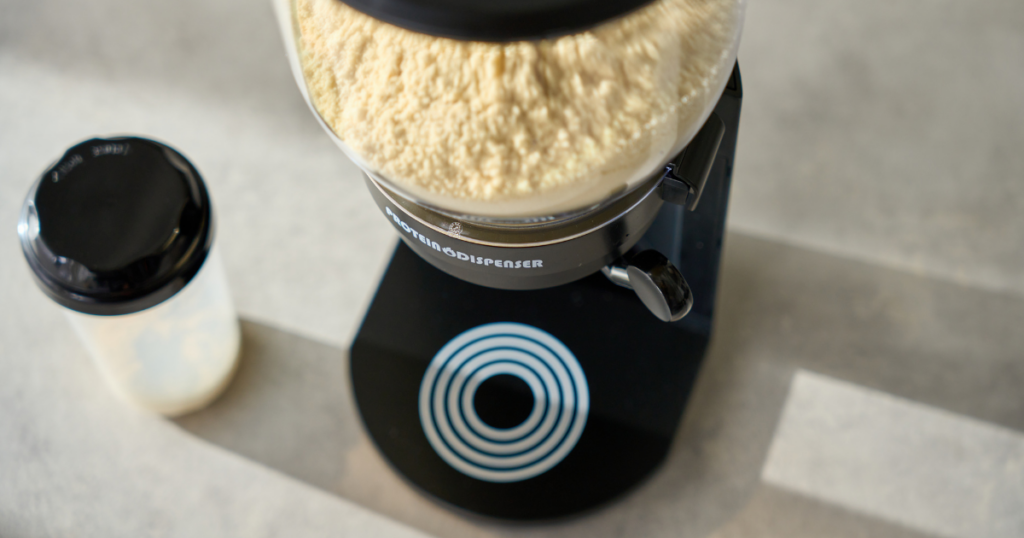
To keep costs down, I’d wanted the base plate to be plastic. But the moment we assembled a real unit, every lever pull made the whole thing flex and slide.
With 1 kg of protein in the hopper, rotating the dosing chamber takes real torque. Without enough mass, the whole unit shifts every time you use it. We tried everything with the rubber feet. Nothing worked.
The base had to be metal. No way around it.
We tried laser-cutting 10 mm steel plate first, but gave up on that. We ended up casting it, machining it at Showa Denki’s Iwase plant, then powder-coating the surface.
The result? The base alone accounts for nearly half the unit cost.
We Were Calculating Pre-Tax: The B2B-Only Company’s Mistake
Showa Denki is a contract manufacturer, a supplier. In the B2B world, every quote and every internal cost calculation is pre-tax. Parts, base, assembly, hardware. Everything pre-tax.
I’d been planning for a retail price under ¥15,000, working off ¥14,800 ex-tax.
When I sat down to build the Makuake reward tiers, it hit me: “this doesn’t work. I should have been calculating tax-inclusive.”
In Japanese B2C, displayed prices are tax-inclusive by convention. The price had to become ¥14,800 tax-inclusive (around US$100), which made the margins tighter.
There was a bigger problem on top of that. We’d planned to eventually expand into B2B (selling through retailers), but I didn’t even know the Japanese word for wholesale price (joudai). There has to be margin between wholesale and retail for that channel to work, and at our cost structure, it simply wasn’t going to be possible. I figured that out around the same time.
100 Influencer DMs: Why I Did It Myself
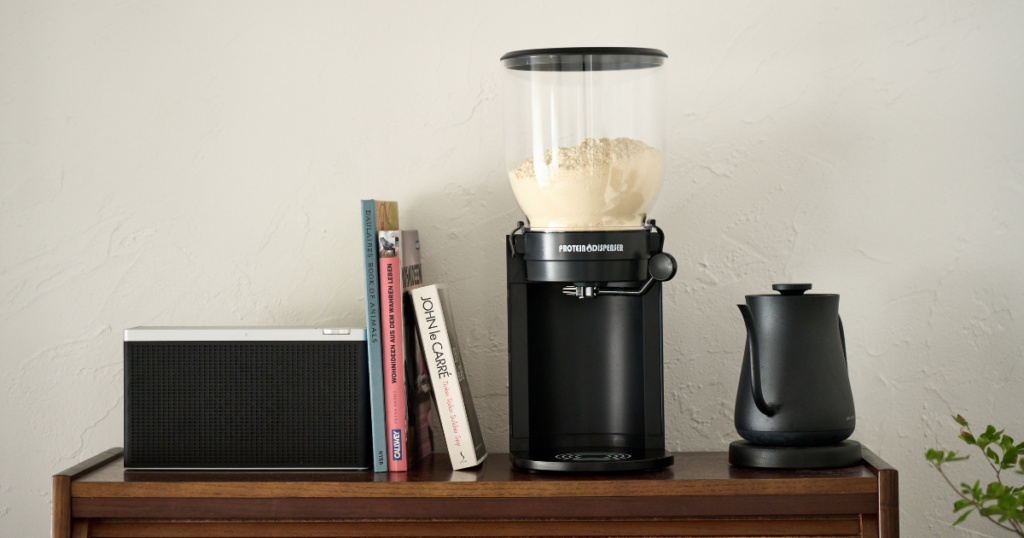
A protein dispenser isn’t something people go searching for. Most people don’t even know it exists. You can’t just put it up for sale and expect orders.
I figured the first buyers would be innovators and early adopters. So crowdfunding made sense as the launch channel. At the same time, I wanted to push awareness with influencer marketing.
There are agencies that specialize in this kind of work, but we had no way to judge whether any specific one was good or bad. So we just did it ourselves, DM’ing about 100 fitness influencers on X (Twitter).
About 20 of them replied saying they’d love to try the product, and we sent them units. The arrangement was that they’d post about it on X on the day the Makuake campaign launched.
Why X? Because I didn’t really understand the other platforms well enough to use them.
Launch: The First Three Days Felt Great
The project page itself was built by an outside agency. They had a writer and photographer working in sync with us, so building the page went smoothly. We believed in what we were building, and once I explained the idea, the team got it too.
November 2022. The campaign launched, and the first three days were something else.
Orders kept coming in, one after another. Watching the first Miaomada product actually sell, that feeling is hard to describe. We’d built something from nothing, and people were buying it.
But it didn’t last.
100 Proteins, Bench-Tested: Many Wouldn’t Drop
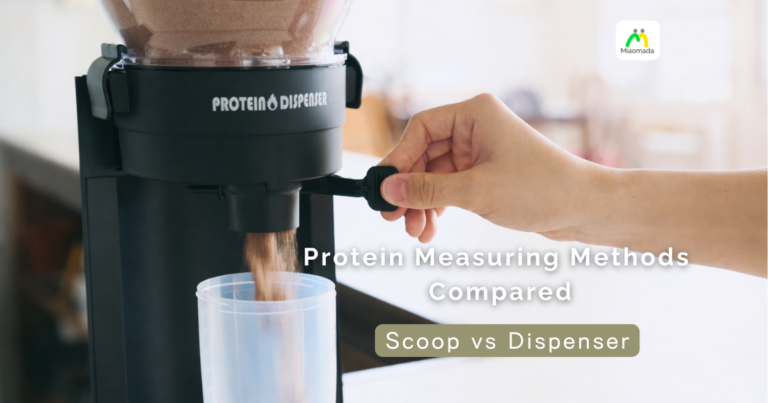
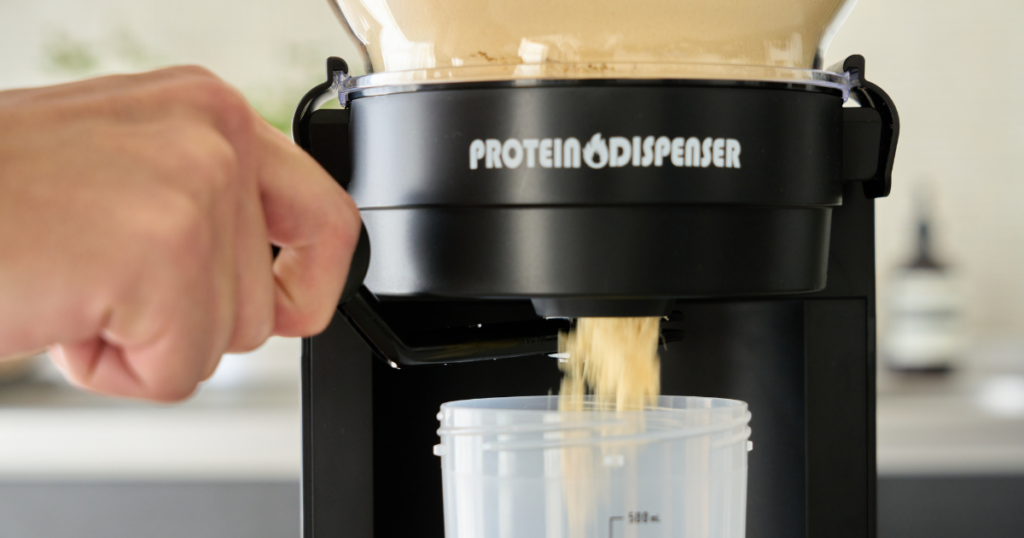
Once the campaign was running, we shifted to building dose guidance: how many grams of powder come out per lever pull.
To figure that out, we bought roughly 100 different protein products and started daily dose testing.
The plan had been to ship two dosing chamber variants 29 cc and 35 cc. But a lot of the proteins wouldn’t drop.
The powders were nothing like the prototype protein we’d been using. The powder would clump and jam inside the dosing chamber. The campaign was already live, and we’d just found a problem in the core of the product.
Things got intense. We dropped the dose-guidance work and started over: figuring out what chamber geometry would consistently let powder drop, all while the campaign was running.
We iterated through shapes. Eventually we landed on one where powder dropped reliably. But that geometry didn’t support both the 29 cc and 35 cc variants. We had to collapse to a single 31 cc chamber.
We posted an “I’m sorry, spec change” update on the campaign page mid-flight.
We rushed the new mold for the dosing chamber and somehow shipped to backers on the promised date. It was tight.
The Joy Was Real, But Brief
The first stretch felt great, orders kept coming. The middle stretch felt awful: “this protein won’t drop, that protein won’t drop either.” The last stretch was anxious: re-tooling and hoping the timing would work.
Final number: 133 backers, ¥1,895,000 (about US$12,600).
And during those weeks staring at 100 different protein powders, something hit me. This dosing approach alone isn’t going to be enough. We need a mechanism that works with any protein, not just some of them.
That realization is what led us to DP-M2, and to the 19-prototype dosing mechanism that I’ve written about elsewhere.
Part 2 covers the DP-M2 campaign, the move toward the US market, and the material selection / FDA story.
For the broader product development arc, see Development Story Part 1 and Part 2.
The ALENNE Protein Dispenser is a Japan-made dispenser, chosen by 312 Makuake backers across two campaigns. One pull, one measured serving. Up to 1 kg storage and a nozzle designed to keep your counter mess-free.