Protein Powder Shelf Life and the Signs It’s Gone Off: What Changes After You Open It, How to Tell, and How to Store It
The best-before date printed on a protein bag is usually set a year or two after the manufacturing date. You think “plenty of time,” put the bag back, leave it, and then one day the color looks off, or the smell seems a little different. Sound familiar?
Here’s the thing: the date printed on the bag assumes an unopened, properly stored bag. Once you’ve opened it, the quality from that point on is down to your storage and how you use it. Today, from the perspective of someone who’s used a protein dispenser for more than 3 years, I want to sort out what the best-before date actually means, how to read the signs of degradation, and how to store powder to get the most out of the date.
Best-Before Date vs Use-By Date
Let’s start by untangling two terms that get mixed up.
- Best-before date: the date through which it tastes good. Passing it doesn’t suddenly make it inedible.
- Use-by date: the date through which it’s safe to eat. Past it, better not to eat it.
What’s printed on protein powder is almost always the best-before date. That’s because powdered protein has low water activity; stored properly, it isn’t the kind of food that spoils all at once. It’s not the strict “dangerous past this day” standard you get with dairy or fresh food. Read it as “the maker’s flavor and quality hold up until this date.”
But that’s the unopened story. The moment you open the bag, what the date means changes.
How the “Real” Window Changes Once You Open It
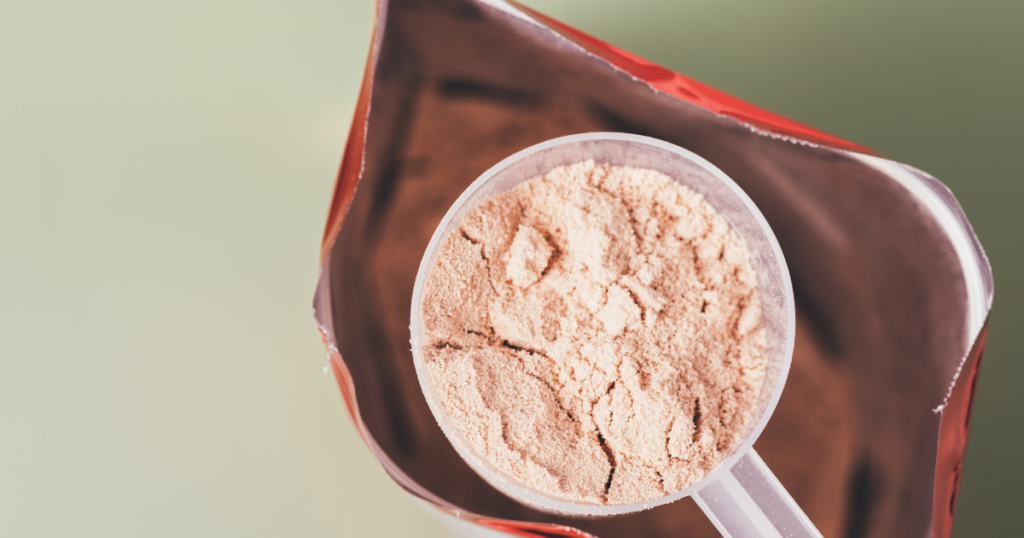
An unopened bag of protein is protected inside from air, moisture, light, and temperature. Makers design for longevity as best they can, with nitrogen flushing or foil-laminated bags. That’s what makes “quality holds until the printed date” a reasonable premise.
There’s variation between makers here, though. Some use foil-laminated bags, some don’t. Speaking as a daily protein drinker myself, a maker that uses a bag built for light and moisture protection, like a foil laminate, gives me the impression they’ve thought carefully about the product, storage included. Worth paying a little more for.
But no matter how careful the bag, once you break the seal, the premise changes. Every time you open it, air, moisture, and particles from the surrounding environment get in. Oxygen that oxidizes the powder itself, water that causes clumping and mold, heat that lowers quality: these build up little by little.
As a rule of thumb, finish an opened bag within 1 to 3 months. In Japan’s hot, humid summers especially, the flavor can drop off sooner than the printed date suggests. Don’t let “there are still months left” make you complacent; it’s more realistic to go by when you opened it.
6 Signs Your Protein Has Degraded

More reliable than the number on the date is what your own senses can pick up. If any of the following 6 apply, I’d suggest not forcing yourself to drink it.
Sign 1: The color has changed
Compared with how it looked when you first opened it, an obvious yellowing, a grayish cast, or a mottled pattern can mean oxidation or moisture has set in. A color shift in a white-ish protein is an especially easy sign to spot.
Sign 2: The smell is off
If it smells oily, sour, musty, or chemical compared with the scent when it was new, be careful. Because protein contains fat, oxidation tends to bring out a distinctive “old oil” smell.
Sign 3: The powder has clumped
Lumps or block-like clusters in the bag are a sign moisture has gotten in. Even if you break them up and it looks normal again, moisture may still be trapped inside.
Sign 4: Oil is surfacing, or the powder feels damp
If it feels moist when you scoop it, looks like oil is surfacing, or feels sticky, there’s clearly a problem with how it’s been stored. This doesn’t improve, so treat it as a clear sign to throw it out.
Sign 5: You can see small insects or mites
This is the one you never want to miss. Powders left for a long time can attract pantry pests. If you see moving specks, I’d check every opened powder you have. If you’re worried about health effects, consulting a public health center or specialist is an option.
Sign 6: The taste is different from before
If the taste when mixed with water or milk is bitter, sour, or just off on the tongue, clearly different from when you bought it, that’s a sign of degradation. For your health’s sake, it’s wiser not to push through and finish it.
If a sign bothers you, I’d suggest stopping rather than pushing through it.
Why Protein Degrades
Knowing the mechanism makes the storage priorities clearer. 4 main factors push powdered protein toward degradation.
- Water: absorbed moisture causes clumping and becomes a breeding ground for mold and bacteria
- Oxygen: drives the oxidation of fat, bringing on smell and taste changes
- Temperature: heat speeds up oxidation and microbial activity
- Light: direct sunlight degrades the components inside
Put the other way: build an environment that keeps these four at bay, and you can maintain quality close to the printed date. In a typical Japanese home, the two that tend to cause trouble are water and temperature.
4 Things You Can Do at Home to Prevent Degradation

For anyone who wants to maintain quality through the best-before date and keep an opened bag tasting good as long as possible, here are 4 realistic things you can do at home.
Tip 1: Write down the open date
Simple, but the payoff is big. Just writing the open date on the bag or container with a permanent marker prevents the “no idea when I opened this” state. That alone clears up the “how many months has it been?” fog and makes the call faster.
Tip 2: Keep it out of direct sun and heat
Avoid spots that heat up easily: by the kitchen window, near the stove, the trunk of a car. Room temperature in a cool, dark place is the rule, and in summer an air-conditioned room is the safe bet.
Tip 3: Open and close it less often
Every time you open and close the bag, air and moisture get in. Either transfer as much as you can in a single opening, or switch to a setup that combines measuring and storage from the start, and you can significantly reduce how often the powder is exposed to air.
Tip 4: Keep your hands away from the powder
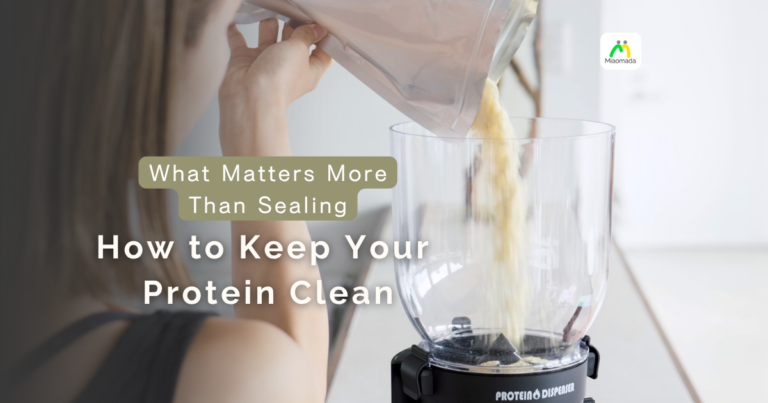
It gets overlooked, but tipping the bag and putting a scoop in by hand each time carries sweat, skin oils, and resident bacteria into the powder. I’ve written about it in What Actually Matters in Protein Storage Wasn’t “Sealing It Tight”, but what really works for hygiene, in my view, is building a setup you don’t have to touch.
Using a Protein Dispenser to Build “Finish It Before It Expires” Into a Routine
There’s one more angle that’s easy to miss when it comes to getting the most out of a best-before date: the “forgot about it and it expired” problem.
You meant to keep at it when you bought it, then your routine changed, you stopped drinking it, and before you knew it, months had passed. Plenty of people go through this. The cause is often “the hassle of prep,” or “it got pushed to the back of the kitchen and dropped out of sight.”
As I touch on in Why You Stop Drinking Protein, and How to Stay With It, once protein is “on your daily path and ready to measure in a second,” your chances of keeping it up change. Keep it up, and you finish the bag without letting it pile up. That, I’ve come to feel, is the healthiest kind of “date management.”
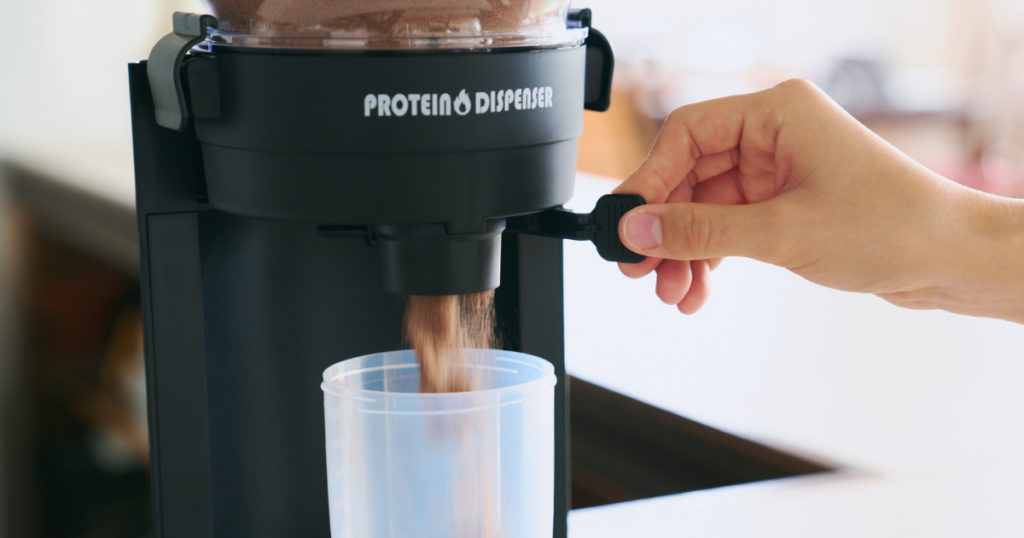
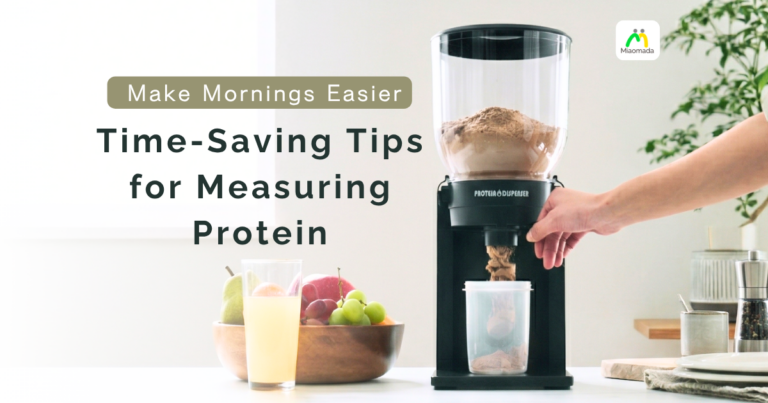
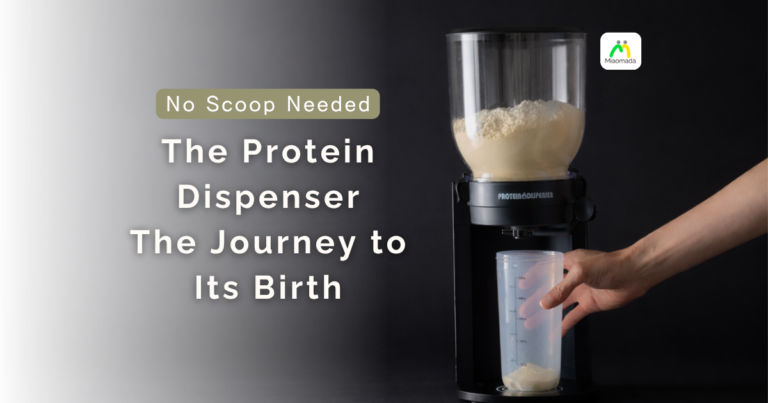
The ALENNE Protein Dispenser we developed was designed for exactly that.
- Pour straight from the bag or tub into the hopper to store it
- Slide the lever to measure a set dose
- Leave it out on the kitchen counter so the look of it nudges you to drink
By combining storage, measuring, and habit, it becomes a setup that gets the bag finished instead of stockpiled.
One thing I should add: the hopper itself isn’t a strictly airtight structure. Even so, I’ve used it for more than 3 years at a pace of finishing within a month of opening, and not once have I been bothered by protein degradation. This is my subjective take, but over one month, keeping your hands off the powder as much as possible matters far more than finely tuning your storage method. On why it’s fine even without an airtight seal, I’ve written it up in What Actually Matters in Protein Storage Wasn’t “Sealing It Tight”.
In Summary: Less About the Number, More About Not Stockpiling
A protein’s best-before date is a number that assumes an unopened bag, stored properly. What you can actually lean on is how long it’s been since you opened it, and a setup that keeps it from degrading in the first place.
- Unopened, the printed date is your guide
- After opening, finishing within a month is ideal (1 to 3 months as a rough range)
- If you notice something off in color, smell, or clumping, don’t force it down
- To get the most out of the date, cut contact with temperature, humidity, light, and air
- And above all, make it a setup where you finish the bag before it piles up
The more often you drink it, the more times you open and close the bag, and the more times your hands touch the powder. That’s exactly why combining storage, measuring, and habit works, both as a defense against degradation and as a way to keep it up.
The ALENNE Protein Dispenser
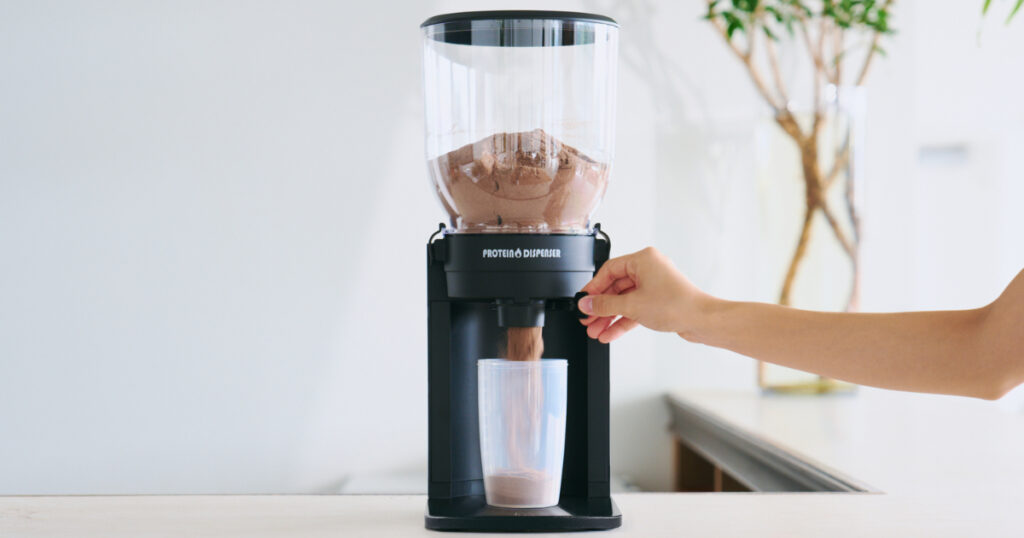
The ALENNE Protein Dispenser is a storage-and-measuring device built for protein: pour straight from the bag or tub into the hopper, measure a set dose with the lever, and keep it on the counter. It keeps contact with air to a minimum while making the daily routine simple.
Get the stretch from opening to finishing as short and as hygienic as you can. If you want to make the most of the best-before date, this is a good place to start.