How to Choose a Protein Storage Container: 4 Types Compared
Choose a protein container on how well it seals and nothing else, and you’ll usually regret it. This is a powder you scoop out every single day, so the choice holds up better when you weigh dosing, hygiene, and everyday access alongside keeping moisture out.
Below, the containers people actually use, sorted into 4 types and compared, with what each one is and isn’t good for, from the people who make protein dispensers.
What to Judge a Protein Container On: 5 Points
Weigh all 5 together: sealing and freshness, dosing, hygiene, access, and cost.
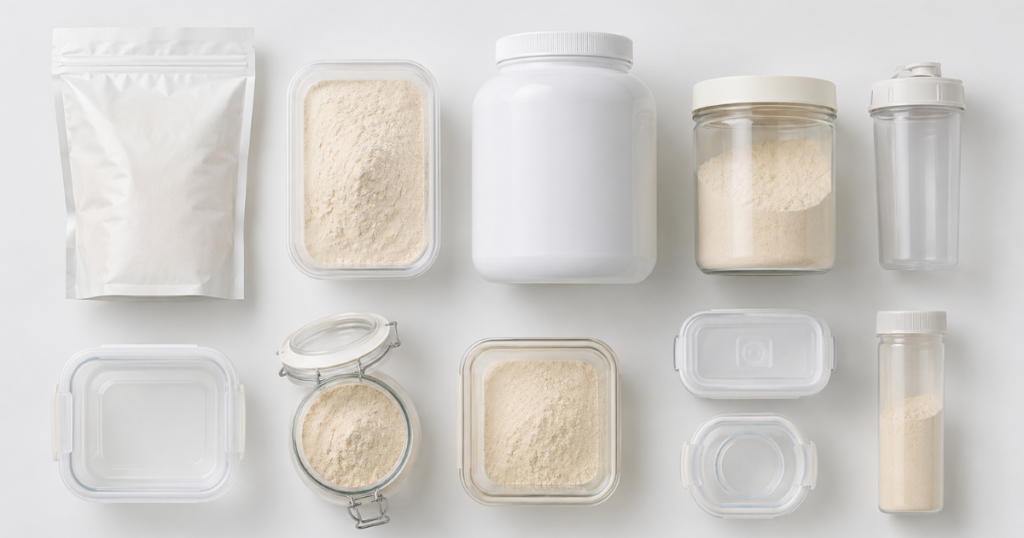
Protein powder absorbs moisture readily, and once it does it clumps and loses flavor. It’s nutritious enough that heat and humidity can bring mites with them too, so keeping moisture out is the baseline. It isn’t the whole job, though, because this is a powder you handle daily. These 5 will point you at the container that suits how you actually use it.
- Sealing and freshness: how well it keeps moisture out and quality in (a gasket makes most of the difference)
- Dosing: whether you need a separate scoop, or the container measures for you
- Hygiene: whether your hands or a scoop touch the powder, and how much work it is to wash
- Access: how wide the opening is, and whether it can sit out where you actually use it
- Cost: whether the price is easy to say yes to
I’ve written about why sealing isn’t the whole story in What Actually Matters in Protein Storage Wasn’t “Sealing It Tight”.
The 4 Types Compared, Side by Side
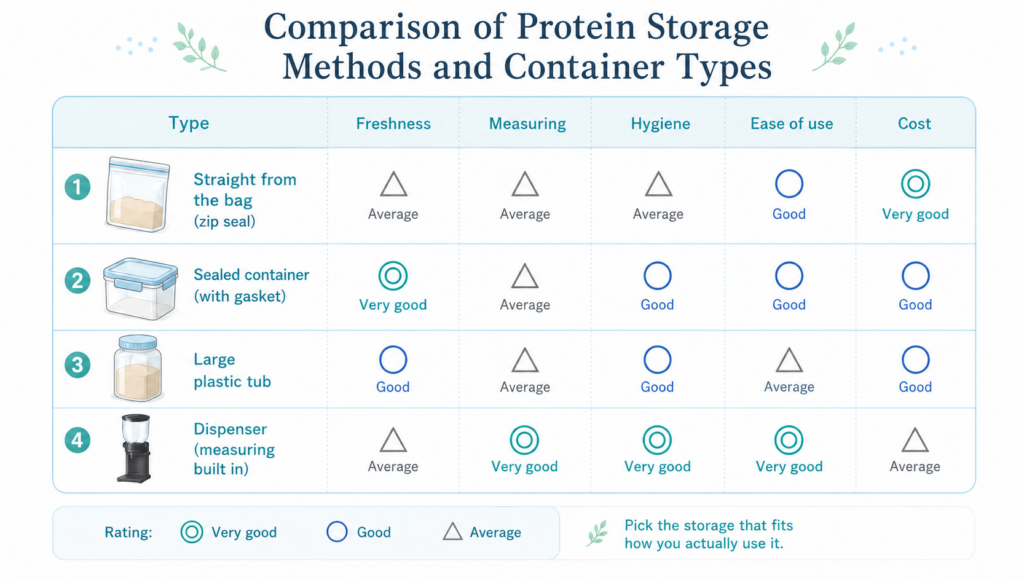
Split the common containers into 4 types, and the strengths and weaknesses separate cleanly. The hygiene column is about whether hands or a scoop touch the powder; the washing side is covered in the write-ups below.
| Type | Sealing and freshness | Dosing | Hygiene | Access | Cost |
|---|---|---|---|---|---|
| 1. The bag it came in (zip top) | Weak | Weak | Weak | OK | Strong |
| 2. Food container with a gasket lid | Strong | Weak | OK | OK | OK |
| 3. Large plastic tub | OK | Weak | OK | Weak | OK |
| 4. Dispenser with dosing built in | Weak | Strong | Strong | Strong | Weak |
Strong means it’s particularly good at this, OK means it handles it, and Weak means it struggles or needs a workaround. These are general tendencies, and individual products vary.
What Each Type Is Good For
The 4 types trade off in one direction: cheap and simple on one end, easy to dose and keep clean on the other. Go through them with your own routine in mind.
1. The Bag It Came In (Zip Top)
This is the cheapest and simplest option, and the weakest on moisture and hygiene. Air gets in every time you open and close it, and the opening pulls in humidity. Push a scoop into the bag and your hand ends up close to the powder, and it gets on your fingers. Fine for getting started, but move it into something else if you plan to stay with it.
2. Food Container With a Gasket Lid
Cheap, easy to find, and strong at keeping moisture out. What gets sold under that description varies a lot, though, from lids that simply rest on top to silicone gaskets with snap-down latches. If moisture is the thing you want handled properly, go for the gasket. You’ll still need a separate scoop, and with a little care you’ll get far less powder on your hands than you would from the bag. This is the pick if cost comes first and moisture second.
3. Large Plastic Tub
This is the big tub you see used for protein storage everywhere. Plenty of protein is sold in one of these rather than in a bag, and when it is, the tub it arrived in doubles as the storage container. It’s light and hard to break. Figure on roughly 2.5 L per kilogram of powder (about 85 fl oz for 2.2 lb). A wide mouth makes scooping easy, and a narrow one makes getting a scoop in and out a nuisance.
4. Dispenser With Dosing Built In
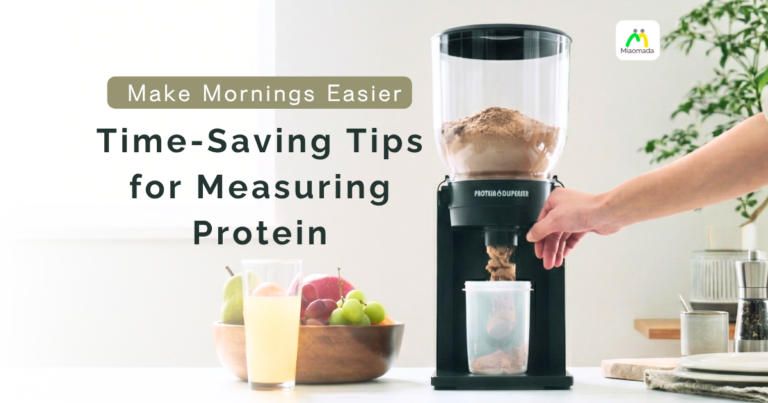
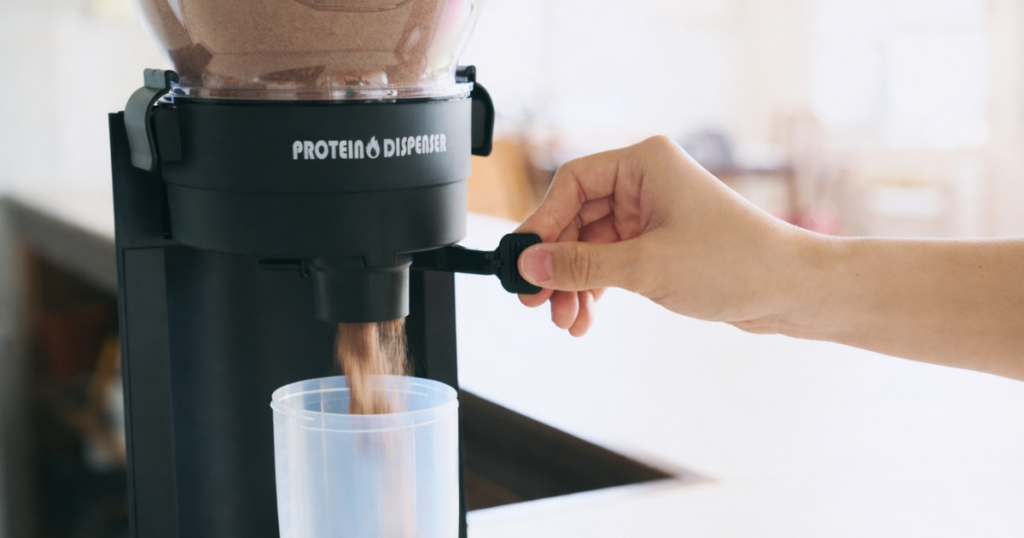
Storage and measuring come in one unit, and your hands never touch the powder. Pull the lever and a serving comes out, with no scoop involved. The hopper opening is wide, so refilling means pouring straight in from the bag with nothing touching the powder. Narrow-mouthed tubs and containers put your hands near the powder every time you scoop or refill, and a dispenser removes that.
It isn’t built to seal the powder in, though, so a gasket lid beats it at holding moisture out over a long stretch. It’s a dedicated device, so it also costs a good deal more than a bag or a container. It has more parts, too, and washing it properly means taking it apart, which makes it the most work to clean of the 4 (day to day, the lever keeps you off the powder, and a full strip-down only needs to happen when you finish a bag).
Sealing and Keeping Hands Off Are Not the Same Thing
When you’re weighing hygiene, it helps to separate keeping moisture out from keeping hands off the powder.
A gasket-lid container closes tightly and holds moisture at bay, but a scoop goes in every time you dose, so your hands come near the powder. A protein dispenser is the mirror image. It doesn’t seal the powder in, but the opening is wide, and your hands stay off the powder both when you refill it and when you use it. One is built to protect freshness from moisture, the other to keep hands off the powder.
Decide which of the two matters more to you, and the container picks itself.
So Which One Should You Buy?
It comes down to the one thing you most want to make easy. Work backwards from that.
- Cheap, and moisture is the only worry → 2. Food container with a gasket lid
- Keep it in the tub it came in, in bulk → 3. Large plastic tub
- Daily dosing and keeping hands off the powder → 4. Dispenser with dosing built in
A dispenser costs a lot more than a bag or a container. Those run roughly US$2 to US$15. What you get for the difference is one unit that handles both the measuring and the hygiene. Since that friction is what breaks most protein habits, it suits anyone who wants it gone before anything else.
The Basics That Keep Protein Fresh in Any Container
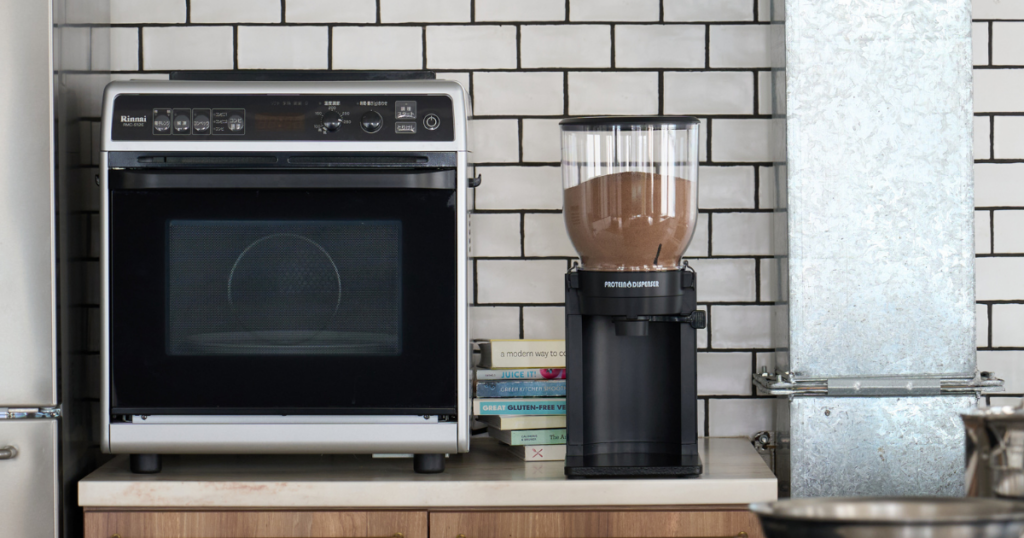
Whichever one you pick, keep it away from moisture, heat, and direct sun, and use a dry scoop.
Where you keep it matters as much as what you keep it in. Avoid the stretch of counter next to the stove and the windowsill that gets full sun. For how long the powder lasts once you’ve opened it and what going off looks like, see Protein Powder Shelf Life and the Signs It’s Gone Off.
In Summary: Pick on the Chore You Want Gone
A protein container serves you better when you judge it on all 5 (sealing and freshness, dosing, hygiene, access, and cost) rather than on sealing alone. Cheap with moisture handled points to a gasket lid, bulk storage in the original tub points to a large plastic tub, and daily dosing with hands off the powder points to a dispenser. The right answer moves with what you’re after.
Get the basics right on top of that (a sensible spot and a dry scoop), and any of them will keep your protein clean for longer. Start from the one chore you most want to stop doing, and choose the container that ends it.
Related reading:
- What Actually Matters in Protein Storage Wasn’t “Sealing It Tight”
- Protein Powder Shelf Life and the Signs It’s Gone Off
The ALENNE Protein Dispenser
The ALENNE Protein Dispenser is Miaomada’s flagship product: pour straight from the bag or tub into the hopper, slide the lever to measure a set dose, and keep it on the counter as part of your daily routine.
The patented dosing mechanism measures one serving with a single pull of the lever. If daily dosing and keeping your hands off the powder are what you want a container to solve, that’s the pair it was built for.