
Which Protein Powders Work in a Protein Dispenser? The Ones That Suit It, and the Ones Where It Depends
Most people get stuck on the same question right before they buy a protein dispenser: will the protein I already use actually work in it? Spending the money and then finding out your powder doesn’t fit is enough of a worry to stop you.
The short answer is that a protein dispenser isn’t tied to any manufacturer or brand, and most protein sold on the shelf goes straight in. Texture does split powders into ones that suit it and ones where it depends, and that part is worth knowing before you buy.
Why “Will Mine Work?” Comes Up at All
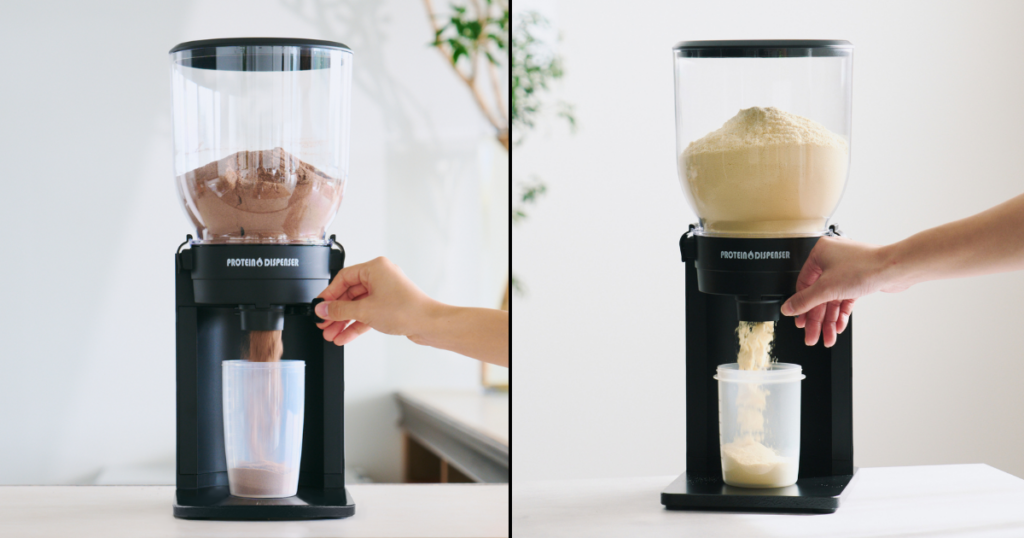
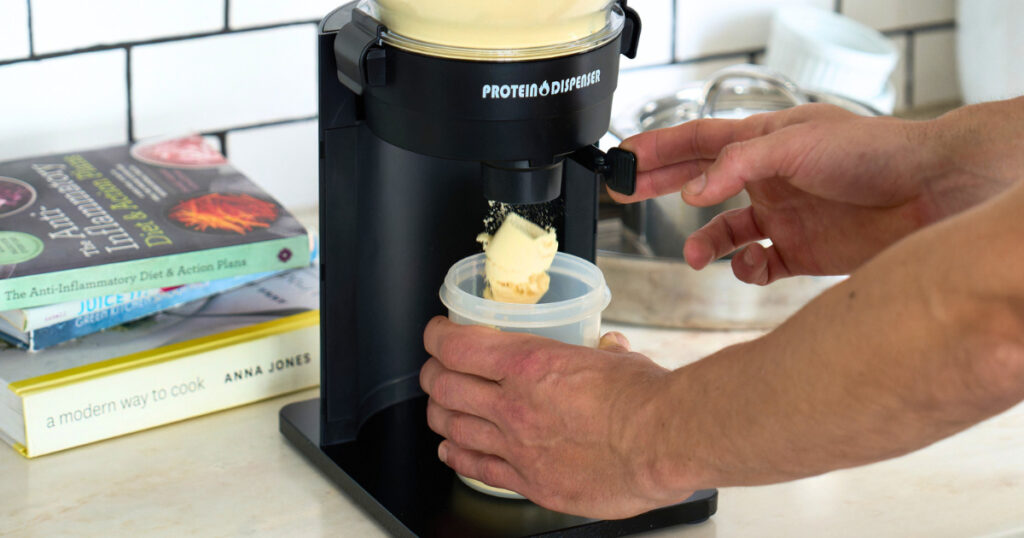
With a scoop, loose or damp, you can pick the powder up either way. A protein dispenser works differently: it holds the powder inside the unit and sends out a set amount when you move the lever. Because the powder has to travel through a mechanism to get out, how freely it flows shapes the way a dispenser feels to use.
That’s where the question comes from. It isn’t a complicated one, though. Here’s how powder texture plays into using a dispenser.
Almost Any Protein on the Shelf Works
The first thing to settle is that the raw material isn’t what decides whether a powder works.
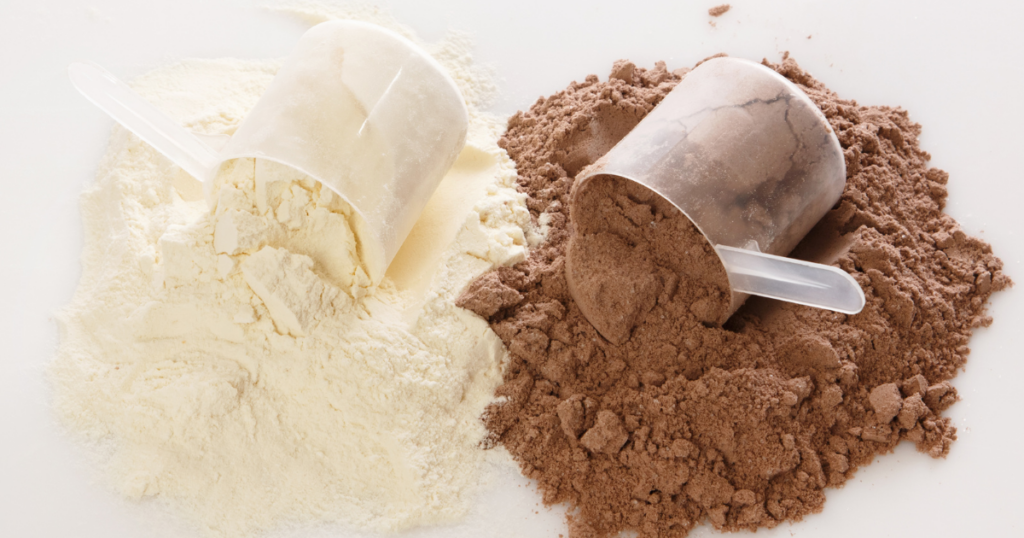
- Whey (WPC and WPI): the most widely sold, and mostly on the loose side, so it suits a dispenser well
- Soy: plant based, with slightly finer particles, and it works without trouble
- Casein: tends to sit damper than whey, and it works too
The split between whey, casein, and soy has almost no bearing on whether a dispenser will handle it. If you’re on the fence, start from the assumption that the protein you already buy goes straight in.
Flavor makes no difference either. Chocolate, vanilla, matcha: as long as it’s a powder, it behaves the same.
What Actually Decides It: The Texture of the Powder
If the type doesn’t decide it, what does? Texture. 2 properties in particular: how heavy or light the powder is, and how easily it kicks up into the air.
The Powders That Suit It: Loose to Slightly Damp
Open the bag, and the powder runs. Lift a spoonful, and it falls away cleanly. That kind suits a dispenser very well. Most whey on the shelf arrives in that state and doses smoothly once you transfer it.
Powder that has picked up a little moisture belongs in the same group. If it has only gone slightly damp in the weeks since you opened it, dosing rarely suffers. A powder with some weight to it actually suits a dispenser better than a light, airy one.
Where It Depends: Powders That Kick Up After a Dose
First, to be clear: a powder that kicks up still doses accurately. The particles are fine, though, so after a dose some of it can drift up out of the shaker’s mouth, and over time it settles on the stand, the outside of the nozzle, and around the base.
Whether that bothers you varies a lot from person to person. Plenty of people never notice it, and some want to wipe it down often. We’re refining a nozzle designed to hold the finer powders down.
Where It Depends More: Light, Airy Powders
The one to watch more closely is powder that holds a lot of air and feels light for its volume. It doses too, but it leaves more residue than the fine powders above.
Static is why. Light powder picks up a charge readily, and as the charge builds over weeks of use, residue that didn’t register at first starts to add up. If you’re going to use a dispenser, this is the type to steer around.
When residue does bother you, wipe it off with a clean, dry cloth.
There’s no category of raw material to avoid here. Weight and how easily the powder kicks up are the only 2 things to keep in mind.
The Same Brand Can Change Texture
One more thing worth knowing is that the texture of a single product isn’t constant.
Even for Japanese brands, most of the whey is imported, from New Zealand, Australia, and the EU. Raw milk varies by season, and the drying conditions shift the bulk density (how tightly the powder packs) and how freely it flows. So the same brand can flow freely one time and come out damp the next.
That shows up in the dose. The same lever pull delivers more of a densely packed powder than of a light, airy one. It’s the same reason the scoop in the bag never promises ‘one scoop = X grams’.
None of this is worth fretting over. A new bag that feels a little different is ordinary.
A Few Tips for Refilling and Using It
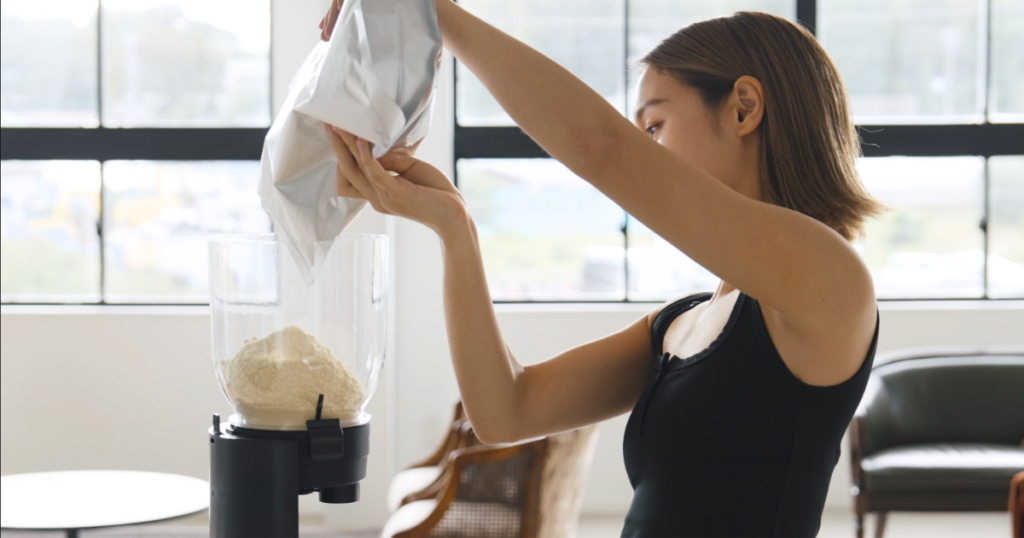
- Refill straight from the bag or tub, no scoop: the unit is built so you pour into the hopper without touching the powder. There’s no need to spoon it across. A bag goes in straight from the opening, and a 1 kg tub (about 2.2 lb) pours the same way. Your hands never touch the powder when you refill it or when you use it, so it stays clean
- Wipe off residue when it bothers you: fine and light powders can cling from static, so give the unit a pass with a clean, dry cloth
- Don’t leave it somewhere humid: beside the sink or next to the stove, where damp and heat collect, is a bad place for any powder, dispenser or not
In Summary: Look at the State of the Powder, Not the Type
- Whey, soy, or casein, WPC or WPI, flavored or plain: most protein on the shelf goes straight in
- What decides it isn’t the raw material but the texture, meaning weight and how easily the powder kicks up
- Fine powders drift a little after a dose, and whether that matters to you is personal. Very light, airy powders build up residue from static, so steer around those if you can
The worry about whether your own protein will work is, in almost every case, unfounded. Transfer the powder you already buy, and the scooping and the spilling both drop out of your morning. That’s the clearest thing a protein dispenser is good for.
The ALENNE Protein Dispenser we build at Miaomada isn’t tied to a brand either. Pour in the protein you already have, and one pull of the lever measures what you need straight into the shaker, with no scooping and no powder across the counter. For how the mechanism works, see Inside Our Patented Dosing Mechanism.
The ALENNE Protein Dispenser
The ALENNE Protein Dispenser is Miaomada’s flagship product: pour straight from the bag or tub into the hopper, slide the lever to measure a set dose, and keep it on the counter as part of your daily routine.
It takes the protein you already buy. If the powder in your cupboard flows freely, or has only gone slightly damp, which covers most of them, it will feel right from the first dose.


![Inside Two Successful Makuake Crowdfunding Campaigns [Part 1] — DP-M1, Setting Off From Zero Recognition](https://en.miaomada.co.jp/wp-content/uploads/2026/04/260424_008_part1_en-768x403.png)